Real, messy hope delivered to your inbox, from Good Good Good.
The best good news stories from September
September was filled with so much good news, it’s easy to overlook some of it!
Today, we’re highlighting some of the most popular stories from the past month — to help make sure you catch all the good news you might have missed.
Hegseth made military fitness tests ‘harder’ for women in combat roles — 9 in 10 female Marines are passing
New spring physical fitness test data show that 91.38% of women Marines who have taken the test since January have met or exceeded that threshold, and 96.53% of men have.
Thanks to abundant sunshine and smart policy, New Mexico’s electricity prices are some of the lowest in the US
The Public Service Company of New Mexico, or PNM, said it delivered 80% carbon-free electricity in 2025 after investing in solar energy, batteries, and wind.
Amid scrutiny, Texas Gov. Greg Abbott blocked agencies from spending money on Flock
The order came as The Texas Tribune was preparing to publish an investigation detailing how a state agency has devoted at least $30 million to building the state’s Flock surveillance network.
Decades after they were hunted to near extinction, black bears are now rebounding in southern US states
Black bears were once abundant across most of the United States, but decades of habitat destruction and overhunting in the 1800s and 1900s threatened to wipe out the population altogether.
Humanitarian groups delivered 84 metric tons of aid to Nepal in the wake of deadly flash floods
The aid on board included acute watery diarrhea kits and diagnostic equipment; water tanks, hygiene kits, and water treatment supplies; tents; winter clothing kits for infants and children; and learning materials.
A teen invented an award-winning device that can catch elephant poachers in real time
The device uses a $250 low-resolution thermal camera that can plug into an iPhone and, once attached to a drone, give real-time insights with 90% accuracy.
A federal court upheld a ruling requiring shrimpers to use ‘turtle-safe’ nets that prevent sea turtles from drowning
A turtle exclusionary device, or TED, is a specially designed fishing net built on a slanted metal grid with an opening that allows large animals like sea turtles to escape as it catches smaller targets like shrimp.
After tourists put them at risk, over 3,000 sea turtle hatchlings are now swimming free thanks to local volunteers
The Tortugas Fundación Yepez A.C., a Mexican nonprofit dedicated to sea turtle conservation, released between 3,200 and 3,500 sea turtles into the Gulf of Mexico.
Volunteers are planting 3,000 new trees across the country to honor each life lost on 9/11
The initiative kicked off with the planting of a 15-foot willow oak tree in New York City’s Battery Park at the Labyrinth of Contemplation, a space created to honor the victims of the attacks.
Incarcerated people in Kansas raised over $4,000 to pay off kids’ school lunch debt
On August 3, nearly 30 incarcerated men gathered to present Corey Roy, the USD 211 Superintendent of Schools, with a final total of $4,267 — much of it raised from their own, personal funds — covering about 71% of the district’s debt.
Indigenous ‘turtle women’ are helping save endangered freshwater turtles in the Amazon
To help the turtles recover, a group of seven Siekopai women, who call themselves Tari Nomiowa’i, or “turtle women,” patrol the riverbanks looking for turtle tracks and nests.
New sensors are preventing high-speed trains from hitting elephants crossing railroads in Sri Lanka
The sensors will be installed along the railway line rather than mounted to the top of trains, and will detect ground vibrations and capture the sound of approaching animals to slow trains down and stop collisions.
Need help? Contact us for assistance. We’ve got your back.
You received this email because you signed up for the Goodnewsletter from Good Good Good — or because you followed a recommendation from another newsletter or ordered a Goodnewspaper.
To stop receiving the monthly edition of The Goodnewsletter, unsubscribe or manage your email settings. To stop receiving all emails from Good Good Good — which may potentially include subscriber-exclusive content — you can opt out entirely.
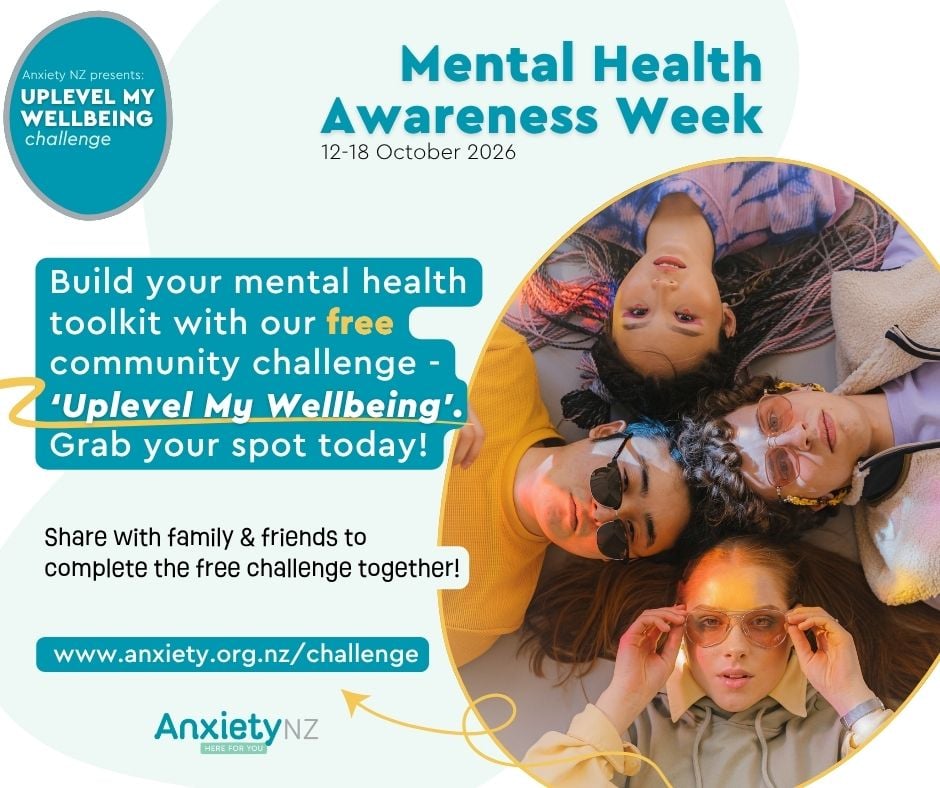
Mental Health Awareness Week is this month, and we’re excited to share something special with you! At Anxiety NZ, we know it is vital to look after your mental health and wellbeing—so we are offering the "Uplevel My Wellbeing" challenge, a FREE 5-day journey to help you take small steps that make a BIG impact.
Starting on October 12th, you'll receive daily emails with simple actions you can take to boost your mental health and wellbeing, covering topics like:
Day 1: Get Moving
Day 2: Get Sleep
Day 3: Get Connected
Day 4: Get De-stressed
Day 5: Get Support
Each day brings practical, manageable options to choose from that you can do straight away. Whether you’re looking to improve your self-care, reduce stress, or simply feel more connected, this challenge is for you.
PDF Flyer - that can be printed onto A4 paper and hung on noticeboards
Facebook Post
Instagram Post
Facebook/Instagram Story
Suggested text for your caption that you can personalise if you wish
Thank you for taking the time to share about this fun community resource - it's going to be great.
Keen for more ways to get involved?
Did you know that Anxiety NZ is a charity NGO (non-governmental organisation)? Our mission is to provide mental health support, treatment, and education so that we can help build a more resilient and thriving Aotearoa NZ together. You can help us make a difference in the lives of the growing number of Kiwis seeking support for anxiety and other related conditions.
Here are a few ways you can help us keep going in our mission:
Your support helps us to answer the 0800 ANXIETY Helpline calls 24/7 and support people when they need it the most. Please open your heart and donate today!
77 Morningside Drive, St Lukes, Auckland, NZ 1025, Auckland
New Zealand
You are receiving this email because you opted in for updates from Anxiety NZ. If you no longer wish to receive these emails, you can unsubscribe at any time by clicking unsubscribe below.