Real, messy hope delivered to your inbox daily, from Good Good Good.
Sponsored by
in the headlines...
🎸 Legendary Irish musician Glen Hansard died this week at 56 years old, and beyond his talent, he’s being remembered for his tireless advocacy for people experiencing homelessness.
New Zealand just added five new marine reserves, its biggest expansion in over a decade
After ten years of careful planning, New Zealand has officially added five new marine reserves along the southeastern coast of the Otago Peninsula. The “no-take” zones add up to 308 square kilometers (roughly 76,000 acres), increasing mainland New Zealand’s total marine reserve coverage by nearly 50 percent.
In addition to hosting vulnerable kelp forests, offshore canyons, and deepwater coral communities, the reserves have also proven to be vital breeding grounds for imperiled species.
Local conservationists said that the expansion “can’t come soon enough,” as native animals like the albatross, Aotearoa New Zealand sea lion, and yellow-eyed penguin teeter on the brink of local extinction on the New Zealand mainland.
Even better: When it came to creating the new marine reserves, New Zealand’s Department of Conservation worked hand-in-hand with the local Kāi Tahu tribe every step of the way. Going forward, a dedicated team of nine specialised rangers, from both groups, will jointly handle daily water monitoring, and the marine protections extend Māori guardianship from the mainland into the “moana,” or ocean.
Scientists in Japan discovered a simple way to recover 90% of lithium from used electric vehicle batteries
Electric vehicle sales are reaching record numbers in places all over the world — but one key driver of waste is associated with the lithium batteries required to power them.
Engineers at a Japanese recycling facility think they have found a way to recover around 90% of the lithium in used EV batteries, which could completely transform how the batteries are built and reused long into the future.
By making a simple swap in the recycling process, they turned sludgy battery waste into high-purity lithium that could immediately go into a new battery cell. The process could also cut carbon emissions by around 40%.
Why is this good news? Current recycling methods recover less than half of the lithium in an end-of-life battery — this simple substitution nearly doubles that, addressing one of the main sources of waste in the electric vehicle industry.
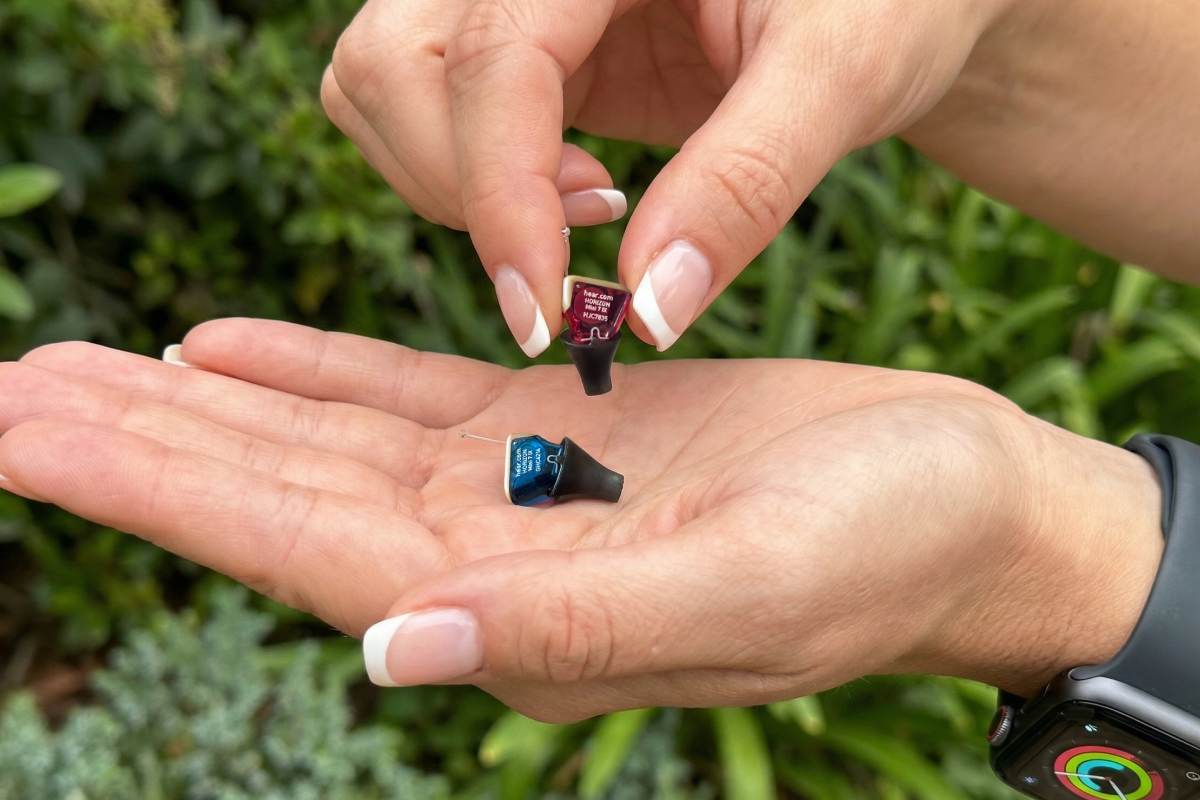
A new German‑engineered hearing device is catching experts’ attention. Not just for its nearly invisible design, but because it delivers unmatched clarity in everyday life.
Most devices rely on a single processor. Horizon IX from Hear.com packs two AI smart chips, separating speech from noise in real time. The result is crisp, natural conversations anywhere life gets loud. Over 670K people are already experiencing this expert-recommended hearing revelation.
See it for yourself with a 45-day no-risk trial of the Horizon IX from hear.com.
Our sponsors help keep the Goodnewsletter free — thank you for supporting them when you can!
If you prefer an ad-free experience, become a Good Good Good subscriber.
People doing good
Courtesy of Guinness World Records
A marine biologist broke a Guinness World Record while raising awareness for shark conservation
Emily Morrison was just 8 years old when she first saw “Jaws” and became convinced that sharks would eat her. But instead of feeding her fear, her father took her to the library so that she could learn more about them.
With every fact she uncovered — for example, that sharks are older than trees — she fell in love with the ocean predators. Later, her passion for sharks inspired her to pursue a career as a marine biologist, which brought her face-to-face with her favorite animal a hundred times over.
Today, Morrison has 108 tattoos, one for every shark she’s encountered. It’s a pursuit that’s earned her the Guinness World Records title for the woman with the most shark tattoos, and an appearance in the upcoming “Shark Week” segment on the Discovery Channel’s “My Strange Shark Addiction.”
Why is this good news? Famous biologist Eugenie Clark once said: “No creature on earth has a worse, and perhaps less deserved, reputation than the shark.” Morrison has long used her social media platform to restore that reputation, sharing footage of dives and debunking harmful myths. Her newfound fame amplifies her voice in shark conservation, helping her educate others on their important role in ocean health.
In a major milestone for citizen science, over 1 million observations have been recorded in Australia’s ‘Bug Hunt’
Since October 2025, Australians across the country have been participating in the Bug Hunt, documenting invertebrates in their gardens, parks, and households.
Those observations have already helped detect invasive species, like fire ants. Just last week, citizen scientists and biosecurity experts caught an incursion of the invasive Asian honey bee around Brisbane.
Why is this good news? One bug hunt coordinator said invasive species have been a key contributor to 66% of species extinctions in Australia since colonization. The Bug Hunt helps quickly spot invasive invertebrates that threaten to do the same, so authorities can swiftly be alerted. It also empowers locals to get involved in an effort that makes a real difference.
Solar energy is having its best summer yet across Europe, generating a record 25% of electricity
In both May and June, solar was the top source of electricity in the European Union, providing a record-high 25% of its power in June alone. Spain and Germany received more than one-third from solar that month, and in Hungary, it was almost half.
Europe has rapidly adopted solar power capacity, and just five years ago, it only delivered around 10% of the EU’s electricity in the sunniest months. Before Russia’s war in Ukraine, the region was largely dependent on gas.
With solar displacing coal and natural gas, planet-warming pollution has dropped dramatically, with carbon emissions from electricity declining by one-fifth between 2020 and 2025.
Why is this good news? Europe has already had multiple, back-to-back heatwaves this summer, extreme weather events that experts attribute to the worsening climate crisis. The clean energy transition is key to reducing the carbon emissions that exacerbate the crisis, and Europe is on the right track.
Whether it’s paddling a canoe or knitting a sweater, hobbies are the special activities people do purely for enjoyment. But they are also representative of something bigger: The true essence of who each one of us is — the thing we choose to do when we’re not working or taking care of life’s mundane tasks.
The Hobbies Edition of the Goodnewspaper is filled with stories that will remind you of the good in the world and make you feel more connected to other humans and all the unique things that bring us joy.
You are currently a free subscriber to the Goodnewsletter. To get an ad-free Goodnewsletter, get a monthly Goodnewspaper, support good news journalism, and more — become a paid subscriber.
Get good news in your Google Search results in just two clicks!
Need help? Contact us for assistance. We’ve got your back.
You received this email because you signed up for the Goodnewsletter from Good Good Good — or because you followed a recommendation from another newsletter or ordered a Goodnewspaper.
To stop receiving The Goodnewsletter, unsubscribe. To opt in or out of other emails from Good Good Good, manage your email settings. To stop receiving all emails from Good Good Good — which may potentially include paid subscriber-exclusive content — you can opt out entirely.



Nema komentara:
Objavi komentar