
The fantasy of men who are good within patriarchyI finished ‘Furious’ and I’m Googling Scoot McNairy.
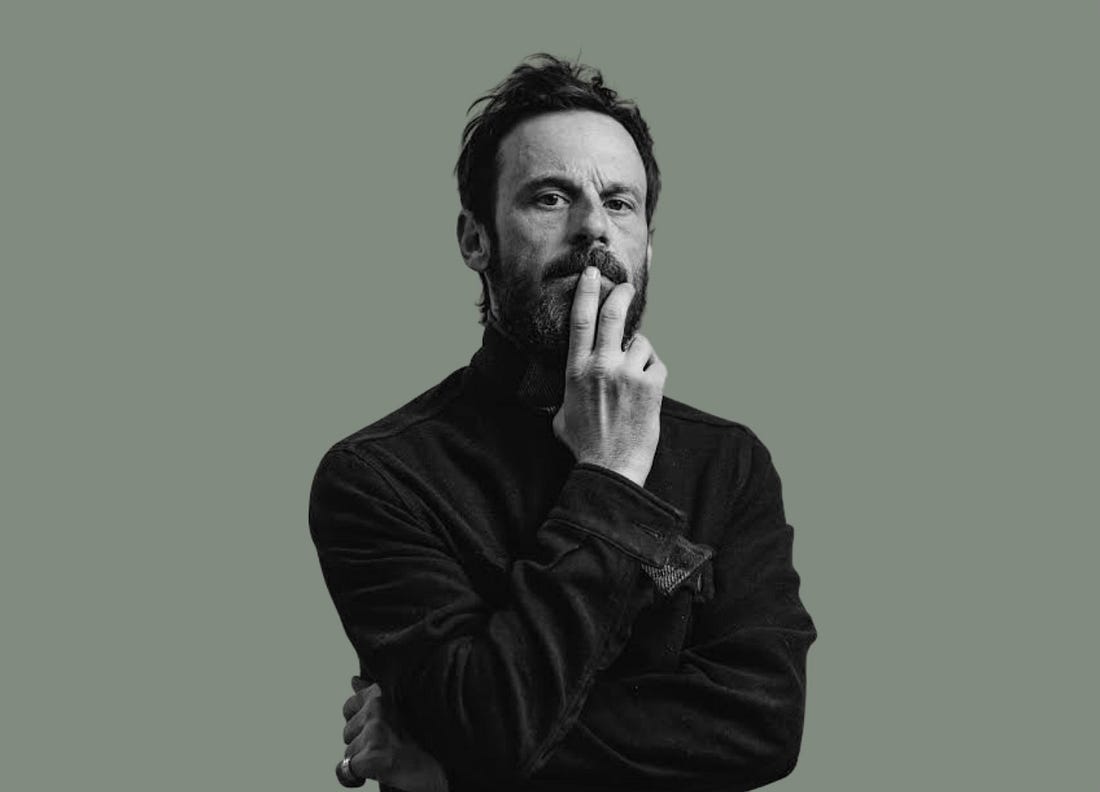
I finished the season finale of Furious last night, sobbing, finding it hard to articulate the feeling—something raw and unprocessed around the geologic layers of patriarchal power and corruption. The other feeling was: I need to go look up some pics of Scoot McNairy. Danny. He is really very delightful. If you’re unfamiliar with the show, Furious follows Catherine, a woman serial killer targeting the high-powered men who abused her in a trafficking ring, and Alice, the FBI agent trying to track her down. Alice (played by Emmy Rossum) has a simmering romance with Danny (played by McNairy), a cop and perhaps the only decent person in his department. I have extremely uneasy feelings about the appeal of the fictional good-guy cop, even restricted as it is to the world of make-believe. I have ever since I downloaded the Law & Order: SVU theme song as the ring tone on my flip phone as a 20something in the 2000s because I loved Detective Stabler. Over a decade later, I blogged for Jezebel about revisiting SVU and “my discomfort with lusting after a fictional character who is pretty much a poster child for toxic masculinity.” Not to mention all the ways that show played into ideas around women’s vulnerability, the specter of trafficking, and cops as necessary saviors.¹ Then again, I wrote:
I realized that part of Stabler’s appeal was that he expressed an element of my own rage. The good-guy cop is a close relative of the sensitive bad-boy archetype, who has long allowed straight women to take pleasure in living vicariously. To imagine ourselves a little louder, wilder, angrier, and more entitled. That is the kind of sublimation many of us are trained into: pouring our desires into being desired. What is satisfying about Furious is that I don’t find myself projecting this energy onto cops. (The irony of expressing rage at patriarchal power through a symbol of patriarchal power—and yet of course we often work with the symbols of power at hand.) In fact, the cops are the ones suppressing the investigation into the abuse. I don’t have to project it onto men, period. Catherine is the one channeling her rage—and fear and pain—at the bad guys. Danny is there as a stable support for Alice, a clear mirror, and sometimes a protector, but not as a rescuer. In the end, Danny decides to turn in his badge. He doesn’t want to be a cop anymore. Unlike with Stabler’s chair-kicking rage, Danny’s appeal is in all the ways that he has weathered the toxic environment of this police department and somehow come out sensitive, tender, good. It’s the miracle and relief of decency and softness in the midst of so much corruption and violence. He embodies a romantic, political, and sexual fantasy. (A question I’m still mulling: What might that fantasy enable or perpetuate?) This eroticized wish is also there with the more typical good-guy cops and the sensitive bad boy types. Underneath Stabler’s rage, so ripe for vicarious pleasure, is the possibility that men can emerge within patriarchy as allies and partners. But with Furious, these two things are disentangled. Sweet Danny doesn’t have to play surrogate for women’s rage—because women are already raging.
1
Still trying to figure out how I feel about these dynamics re: trafficking and sex work on Furious! A programming note: I’ll be on vacation the next two weeks. See you soon!
|





Nema komentara:
Objavi komentar