|
|
 Hello Blog! This is the weekly email digest of The Marginalian by Maria Popova. If you missed last week's edition — how love comes to you, Alan Watts on the wisdom of water, and more — you can catch up right here. And if my labor of love touches your life in a meaningful way, please consider supporting its ongoingness with a donation — for twenty years, it has remained free, ad-free, AI-free, fully human and alive thanks to reader patronage. If you already donate: I appreciate you more than you know. Hello Blog! This is the weekly email digest of The Marginalian by Maria Popova. If you missed last week's edition — how love comes to you, Alan Watts on the wisdom of water, and more — you can catch up right here. And if my labor of love touches your life in a meaningful way, please consider supporting its ongoingness with a donation — for twenty years, it has remained free, ad-free, AI-free, fully human and alive thanks to reader patronage. If you already donate: I appreciate you more than you know.
|

The summer I turned sixteen, I took a bus across Bulgaria — I suppose you could call it running away, though my parents were aware and unconcerned — to go sit on the edge of the Black Sea and watch the blue horizon, to touch its infinite loneliness and infinite happiness. I have watched many horizons in the lifetime since, and always they shimmer with the same strange duality, the same absolute awareness of mortality and of aliveness — the crest and trough of the same wave lapping at the essence of being.
Albert Camus (November 7, 1913–January 4, 1960) was forty when he articulated this with uncommon splendor in his essay “The Sea Close By,” found in his Lyrical and Critical Essays (public library) — the altogether ravishing collection that also gave us his meditations on happiness and despair, the three antidotes to the absurdity of life, and how to live whole in a broken world. 
Albert Camus
Conjuring up a long sea voyage halfway around the world, Camus writes:
 We are setting sail at daybreak. The moment we leave the harbor a short, gusty wind vigorously brushes the sea, which curls backward in small, foamless waves. A little later, the wind freshens and strews the sea with swiftly vanishing camellias. Thus, throughout the morning, we hear our sails slapping above a cheerful pond. The waters are heavy, scaly, covered with cool froth. From time to time the waves lap against the bow; a bitter, unctuous foam, the gods’ saliva, flows along the wood and loses itself in the water, where it scatters into shapes that die and are reborn, the hide of some white and blue cow, an exhausted beast that floats for a long time in our wake. We are setting sail at daybreak. The moment we leave the harbor a short, gusty wind vigorously brushes the sea, which curls backward in small, foamless waves. A little later, the wind freshens and strews the sea with swiftly vanishing camellias. Thus, throughout the morning, we hear our sails slapping above a cheerful pond. The waters are heavy, scaly, covered with cool froth. From time to time the waves lap against the bow; a bitter, unctuous foam, the gods’ saliva, flows along the wood and loses itself in the water, where it scatters into shapes that die and are reborn, the hide of some white and blue cow, an exhausted beast that floats for a long time in our wake.
Finding himself “alone with the horizon,” he touches into the infinite loneliness from which everything we know of love is born:
The waves come from the invisible East, patiently, one by one; they reach us, and then, patiently, set off again for the unknown West, one by one. A long voyage, with no beginning and no end … Rivers and streams pass by, the sea passes and remains. This is how one ought to love, faithful and fleeting. I wed the sea.
When the engine dies in the middle of the Atlantic, the sky opens into the sea:
The curious austral moon, looking slightly pared, keeps us company for several nights and then slides rapidly from the sky into the sea, which swallows it. The Southern Cross, the infrequent stars, the porous air remain. At the same instant, the wind ceases. The sky rolls and pitches above our immobile masts… There are days like this when all is accomplished; we must let ourselves flow with them.
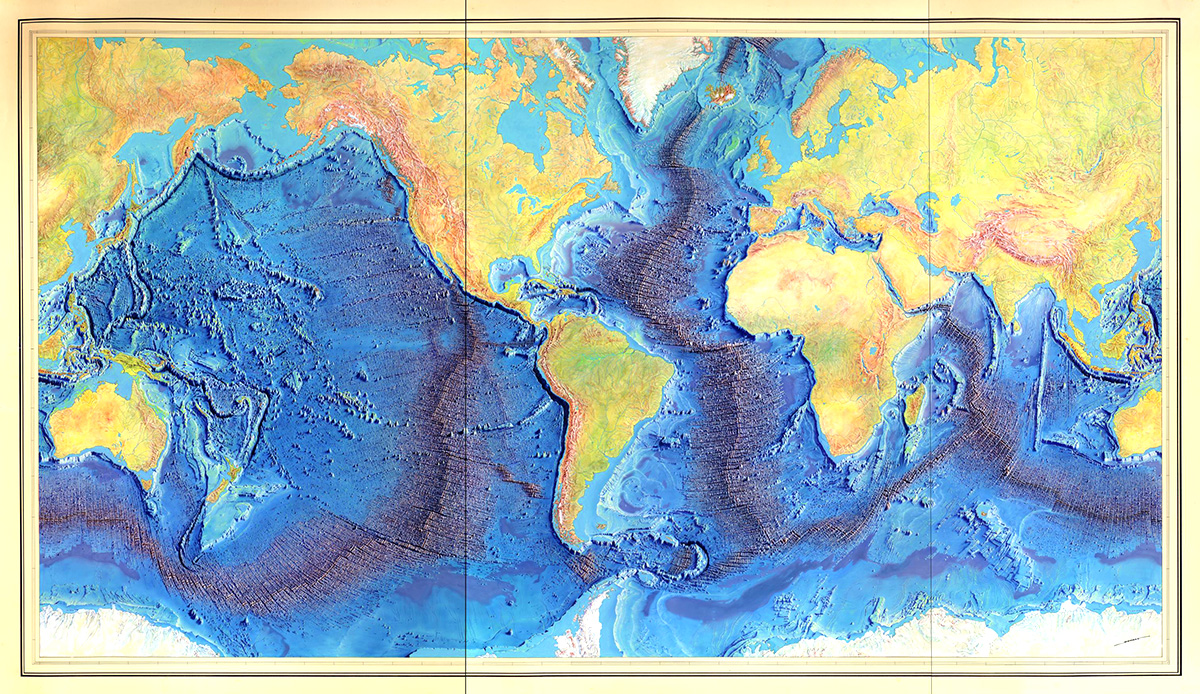
Marie Tharp’s revolutionary map of the ocean floor. (Library of Congress.)
Eventually, South America emerges on the horizon like a postcard from paradise as they curl around the coast and into the Pacific:
Our sails are like iron under the imperious wind. The coast drifts at full speed before our eyes, forests of royal coconut trees whose feet are bathed by emerald lagoons, a quiet bay, full of red sails, moonlit beaches… At night, the ice from Tierra del Fuego comes and beats for hours against our hull, the ship hardly loses speed and tacks about. In the morning, the single wave of the Pacific, whose cold foam boils green and white for thousands of kilometers along the Chilean coast, slowly lifts us up and threatens to wreck us. The helm avoids it, overtakes the Kerguelen Islands. In the sweetish evening the first Malayan boats come out to meet us.
And then, one morning, the voyage comes to an end and the metaphor cracks open:
We drop anchor in a bay filled with a strange silence, beaconed with fixed sails. A few sea birds are quarrelling in the sky over scraps of reeds. We swim ashore to an empty beach; all day plunging into the water and drying off on the sand. When evening comes, under a sky that turns green and fades into the distance, the sea, already calm, grows more peaceful still. Short waves shower vaporous foam on the lukewarm shore. The sea birds have disappeared. All that is left is space, open to a motionless voyage.
Knowing that certain nights whose sweetness lingers will keep returning to the earth and sea after we are gone, yes, this helps us die. Great sea, ever in motion, ever virgin, my religion along with night! It washes and satiates us in its sterile billows, frees us and holds us upright. Each breaker brings its promise, always the same. What does each say? If I were to die surrounded by cold mountains, ignored by the world, an outcast, at the end of my strength, at the final moment the sea would flood my cell, would lift me above myself and help me die without hatred.

Painting by Oliver Jeffers from his series Measuring Land and Sea
The sea then becomes a shimmering reminder of the hardest, simplest truth — that we spend our lives learning to die, which is the same thing as learning to live:
At midnight… the sky itself has weighed anchor, with all its stars, like the ships covered with lights which at this very hour throughout the world illuminate dark harbors. Space and silence weigh equally upon the heart. A sudden love, a great work, a decisive act, a thought that transfigures, all these at certain moments bring the same unbearable anxiety, quickened with an irresistible charm. Living like this, in the delicious anguish of being, in exquisite proximity to a danger whose name we do not know… I have always felt I lived on the high seas, threatened, at the heart of a royal happiness.
Camus never reached the horizon of fifty. Not long after becoming the second-youngest laureate of the Nobel Prize, he died in a car crash traveling back to Paris from a winter holiday, an unused train ticket to the same destination in his pocket.
Couple with this oceanic poem about how to live and how to die, then revisit Rachel Carson on the ocean and the meaning of life and Alan Watts on the wisdom of water.
donating=lovingEvery month, I spend hundreds of hours and thousands of dollars keeping The Marginalian going. For twenty years, it has remained free, ad-free, AI-free, fully human and alive thanks to patronage from readers. I have no staff, no interns, not even an assistant — a thoroughly one-woman labor of love that is also my life and my livelihood. If it makes your own life more livable in any way, please consider aiding its sustenance with a one-time or loyal donation. Your support makes all the difference.
monthly donationYou can become a Sustaining Patron with a recurring monthly donation of your choosing, between a cup of tea and a Brooklyn lunch. |
|
one-time donationOr you can become a Spontaneous Supporter with a one-time donation in any amount. |
 |
|
 |
|
| Partial to Bitcoin? You can beam some bit-love my way: 197usDS6AsL9wDKxtGM6xaWjmR5ejgqem7 Need to cancel an existing donation? (It's okay — life changes course. I treasure your kindness and appreciate your support for as long as it lasted.) You can do so on this page. |
|

“All things are so very uncertain, and that’s exactly what makes me feel reassured,” Tove Jansson wrote in one of our civilization’s great works of philosophy disguised as a children’s book. This is the paradox we live with: We crave certainty, only to discover over and over that it is a mirage, that the love of life is rooted in the courage of uncertainty — because certainty doesn’t allow for surprise, but everything we know of life is the product of the wildest bet that prevailed against the odds of otherwise so we may exist; because certainty thrives on clear category and neat classification, but the most meaningful experiences we have inhabit the liminal spaces between the common categories of what we can name.
NASA engineer Lisa Rosenberg offers a lovely ode to the life-force of uncertainty in the title poem from her altogether ravishing collection Weeds and Stars (public library) — the finest reverie of reality since Diane Ackerman’s The Planets: A Cosmic Pastoral, with the feeling-tone of Whitman’s Leaves of Grass and the sensibility of astronomer-poet Rebecca Elson’s A Responsibility to Awe:
WEEDS AND STARS
by Lisa Rosenberg
Weeds and stars and everything between,
from ocean dwellers to accretion disks —
resilient, intact, or wholly fragmented —
recall the transience of clouds.
The ocean dwellers and accretion disks,
the finest river stones and faintest moons
recall the transience of clouds,
of harmonies at work in gorgeous noise.
The faintest moon, the finest river stone,
the lucid silences at play in dreams
find harmony at work in gorgeous noise.
Let night and day be open quandaries
in play with silences and lucid dreams.
Forget the cries for certainty, the heft
of night and day and open quandaries,
the pitch-perfected music of the spheres.
The case for certainty forgets the weft
of wholes, of fragments and resiliency,
imperfect music of imperfect spheres,
the weediest of stars, the in-betweens.

Art by Ofra Amit for The Universe in Verse
In our yearning for certainty, we have tried to reduce the cosmos to clockwork, to side with probability over surprise, and yet again and again it is the break in the pattern, the chaos in the order, that creates the conditions for possibility. The most brutal benediction of life is that every experience is unrepeatable, every organism irreplicable, every existence a singular phenomenon that has never before occurred and will never again occur in the entire history and future of the universe — something Rosenberg channels in another poem from the book, reverencing the most poetic of numbers:
PRAISE ON PI DAY
by Lisa Rosenberg
To praise the nonrepeating, I will praise
the universe: each smooth circumference,
each jagged fit and fractal-sculpted face
of life and not-life. They’re everywhere you look.
The universe, each smooth circumference
of our daily mess, won’t fit in simple bins
of life and not-life. They’re everywhere
and elsewhere, too. What surprises us is not
our daily mess, unfit for simple bins,
but each repeated lesson learned anew
and elsewhere, too. What surprises us is not
that we forget, but that our learning shifts
with each repeated lesson learned anew.
The aster blooms. The supernova cools.
We might forget that all our learning shifts
into the pupil of the coming day.
The aster blooms. The supernova cools
its jagged fit and fractal-sculpted face
into the pupil of a coming day
where praise is nonrepeating, and we praise.
Couple with another poem of praise for the improbable, then revisit The Universe in Verse.
donating=lovingEvery month, I spend hundreds of hours and thousands of dollars keeping The Marginalian going. For twenty years, it has remained free, ad-free, AI-free, fully human and alive thanks to patronage from readers. I have no staff, no interns, not even an assistant — a thoroughly one-woman labor of love that is also my life and my livelihood. If it makes your own life more livable in any way, please consider aiding its sustenance with a one-time or loyal donation. Your support makes all the difference.
monthly donationYou can become a Sustaining Patron with a recurring monthly donation of your choosing, between a cup of tea and a Brooklyn lunch. |
|
one-time donationOr you can become a Spontaneous Supporter with a one-time donation in any amount. |
|
|
|
|
| Partial to Bitcoin? You can beam some bit-love my way: 197usDS6AsL9wDKxtGM6xaWjmR5ejgqem7 Need to cancel an existing donation? (It's okay — life changes course. I treasure your kindness and appreciate your support for as long as it lasted.) You can do so on this page. |
|

The great cruelty of life, and also its great mercy, is that only hindsight ever knows each last — the last time your lover put their hand on the small of your back, the last sip of the last cup at your favorite coffee shop before it vanished overnight, the last living note of your mother’s voice. Bittersweet or downright devastating, lasts are the currency of loss with which we pay the price for loving. They are the necessary losses that make us who we are, our training ground for mastering the art of losing by which we apprentice ourselves to love.
Great children’s books are works of philosophy in disguise — philosophy being, in Montaigne’s perfect definition, the art of learning to die, which is of course the key to learning to live, just as learning to lose is the key to learning to love. Odds and Ends (public library) by Finnish author and artist Maija Hurme is one such book — a tender illustrated catalogue of losses, from the everyday to the existential, that is at bottom a love letter to what we have, to the bittersweet knowledge that we have none of it for the keeping, calling to mind poet Lisel Mueller’s poignant line: “What exists, exists so that it can be lost and become precious.”
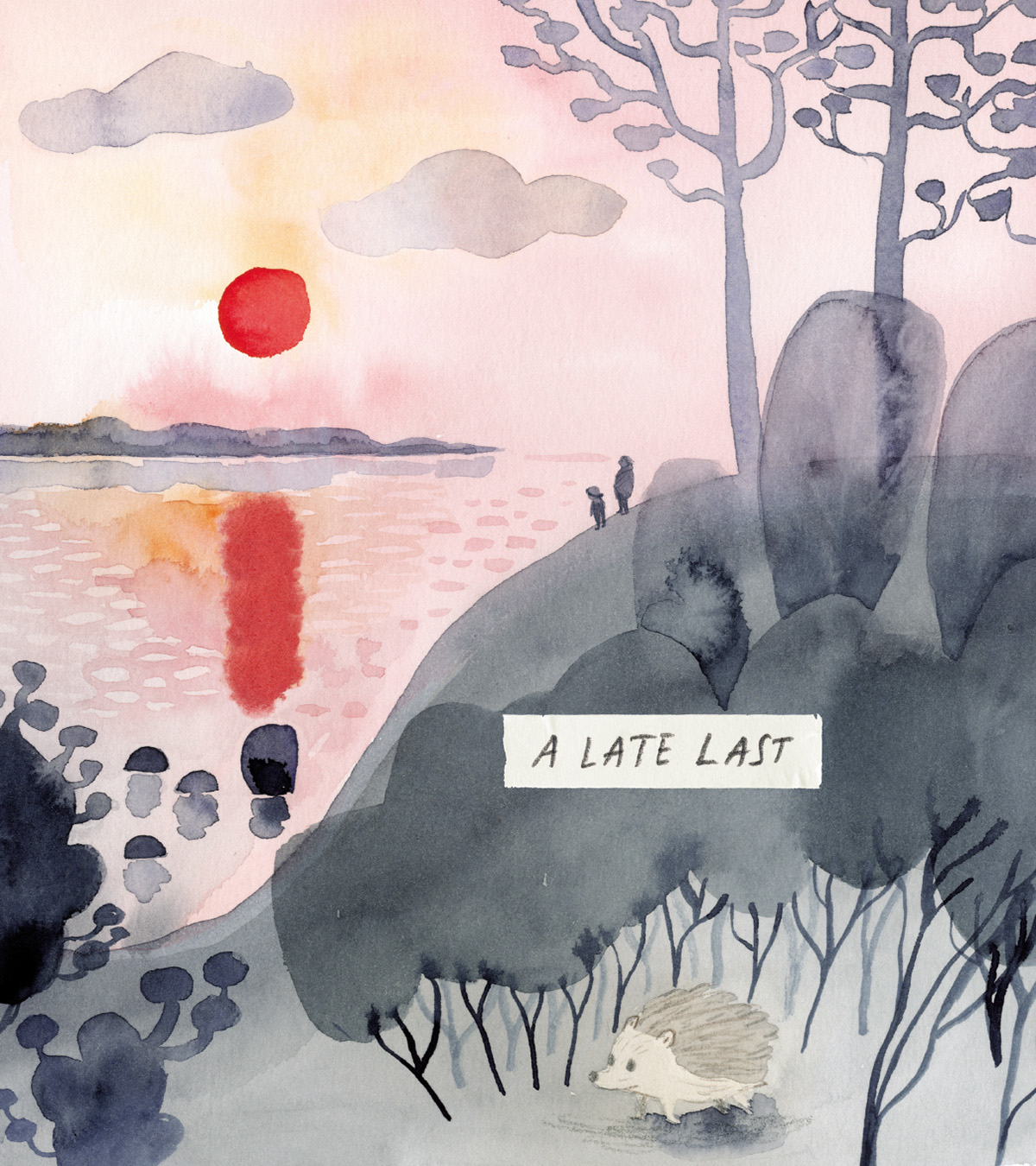
Taxonomized by type, there are the “late lasts” (“the last rays of the sun, spreading color across the sky”), the “hopeful lasts” (“the last migrating bird to arrive might still find a mate”), the “last chances” (“a lost toy is always found in the very last place you look”), the “lasts that are firsts” (a baby’s “last wobbly moment before she starts walking”), the “lingering lasts” (“watching the last snowflake of winter drift slowly and silently down”), the “lonely lasts” (“the last tree standing”).
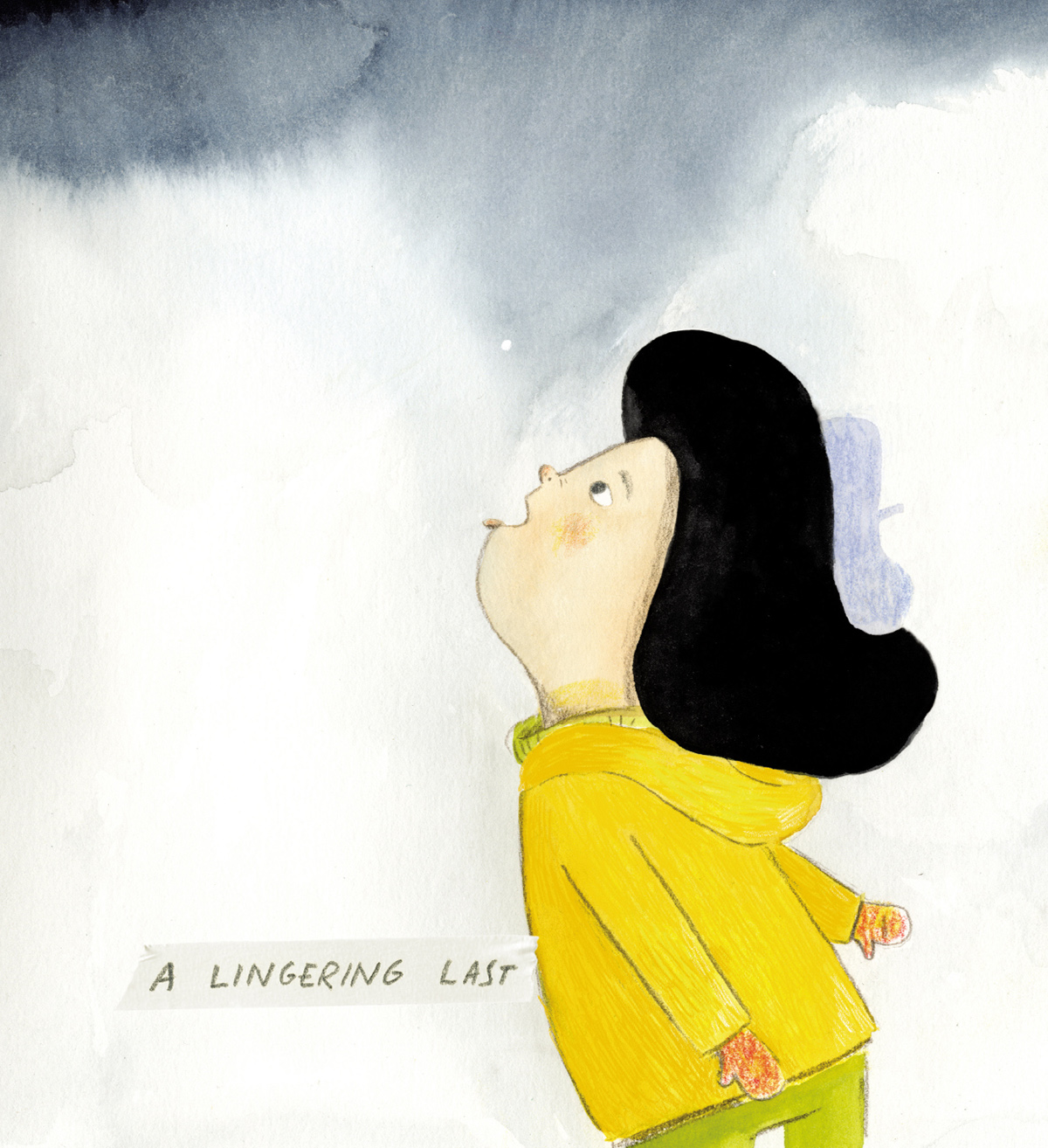
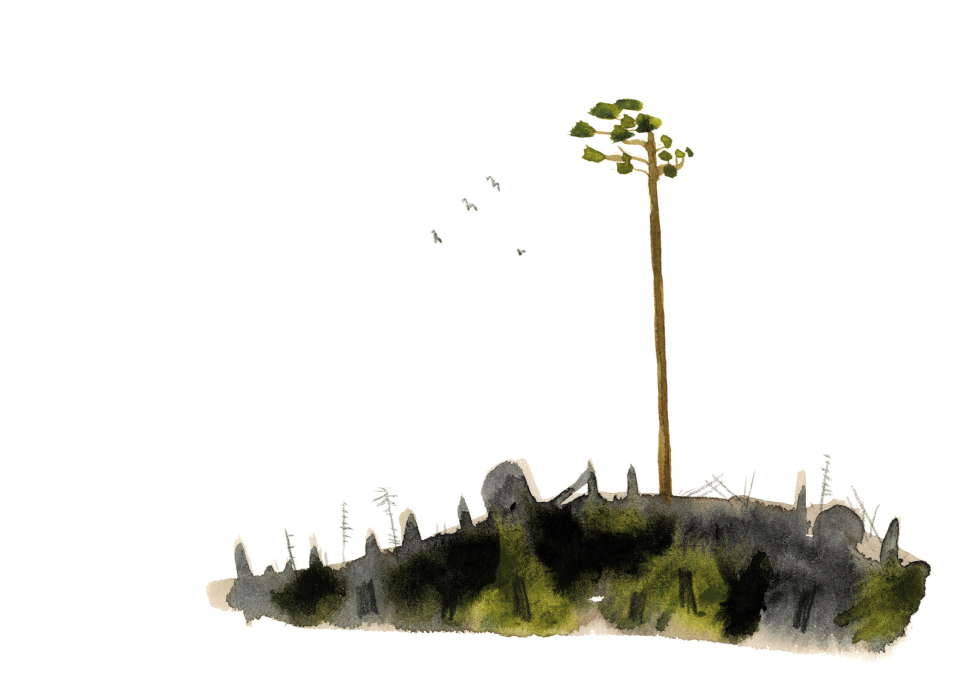
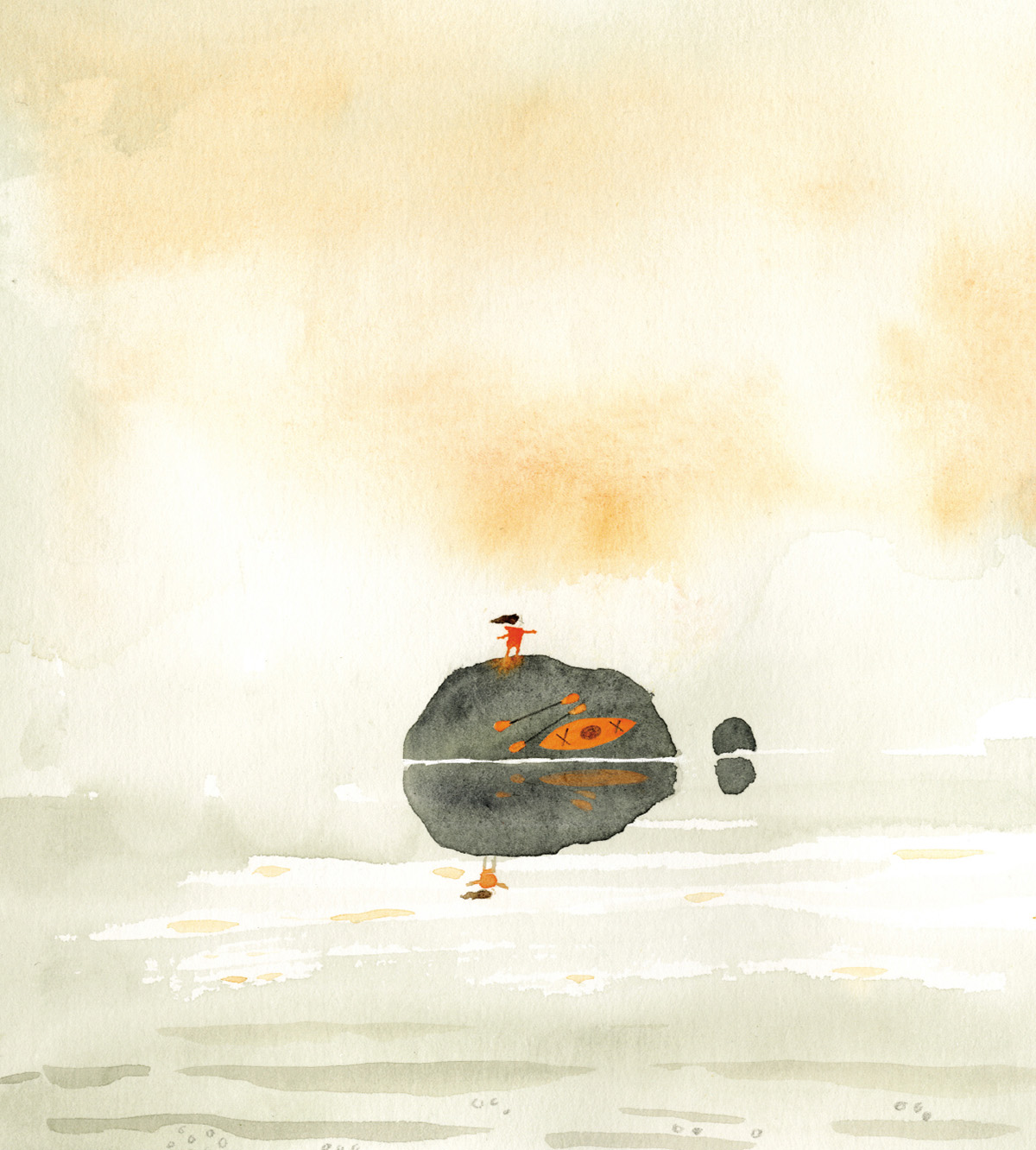
Page after page we come to feel that we are rehearsing for the final act, the “very last last” that awaits every living thing.
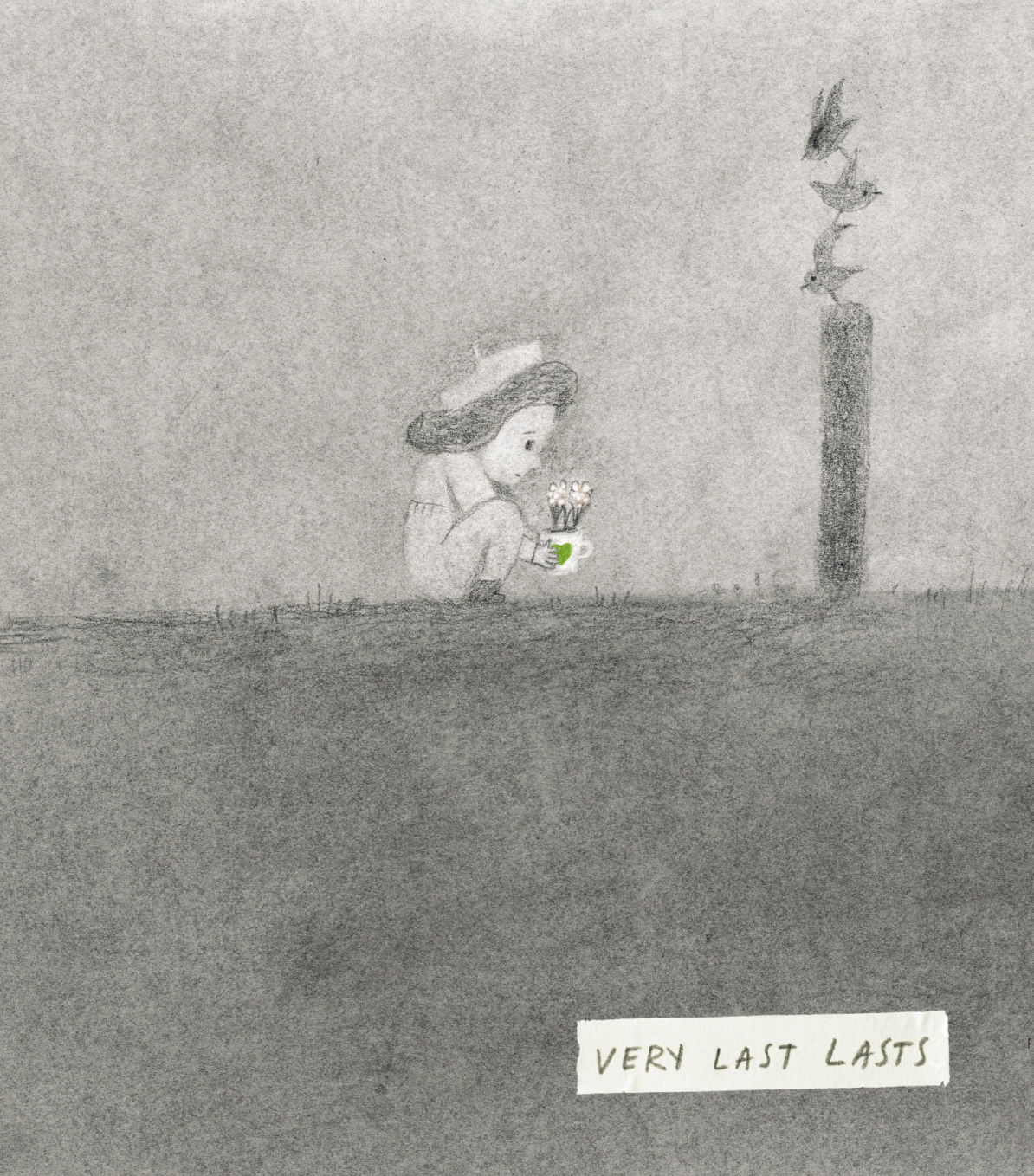
Everything ends with a last:
the very last thought,
the very last breath,
the very last heartbeat.
And the very last goodbyes.
Pulsating beneath it all is an invitation to practice the art of letting go, which, paradoxically, is what allows us to go on living.
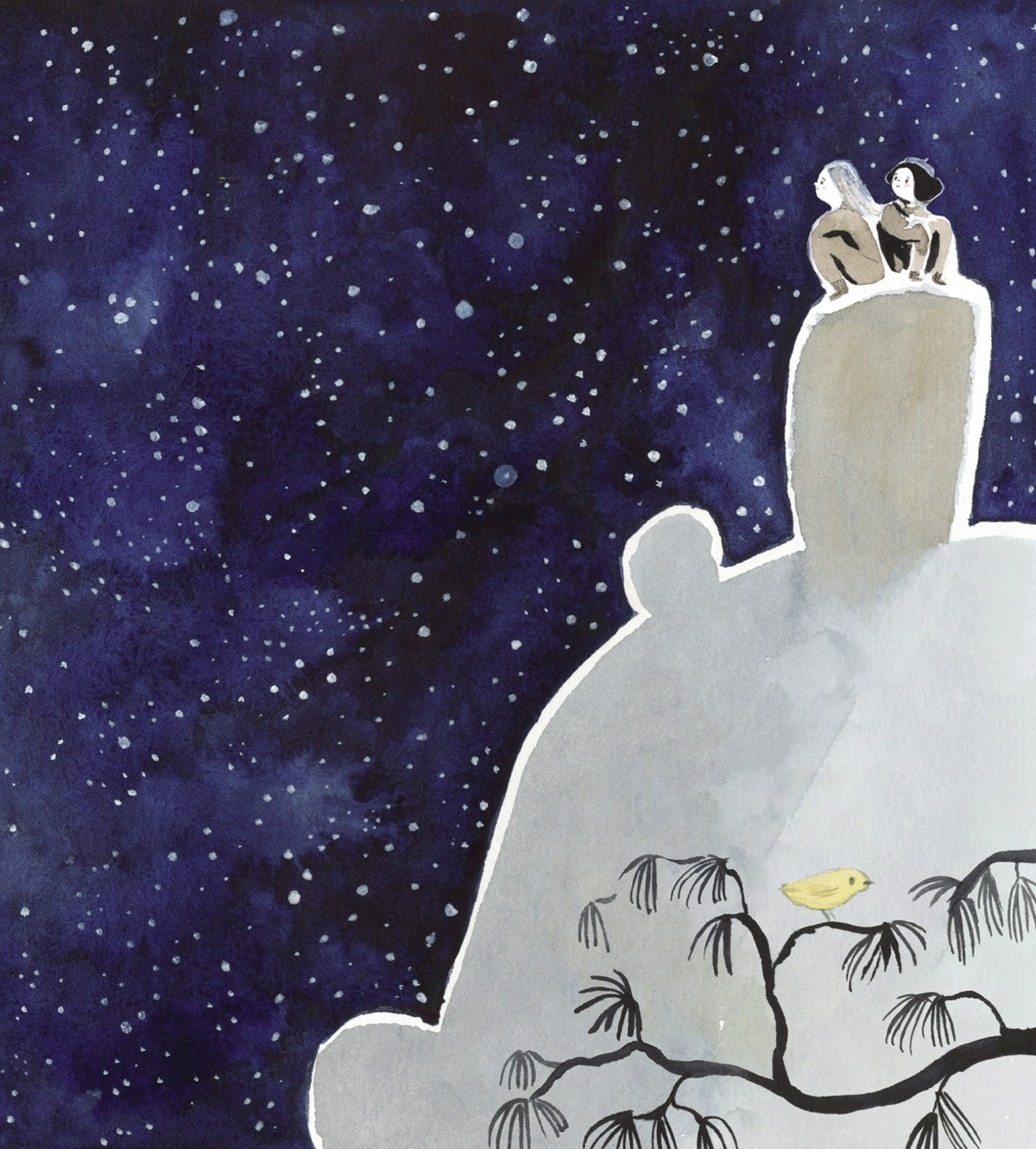
When we look up at the night sky, we see a star suddenly twinkle and then go out.
Maria tells me that this star died hundreds or millions of years ago, long before we were even born. The last rays of its light are reflected in our eyes.
Illustrations courtesy of Enchanted Lion Books
donating=lovingEvery month, I spend hundreds of hours and thousands of dollars keeping The Marginalian going. For twenty years, it has remained free, ad-free, AI-free, fully human and alive thanks to patronage from readers. I have no staff, no interns, not even an assistant — a thoroughly one-woman labor of love that is also my life and my livelihood. If it makes your own life more livable in any way, please consider aiding its sustenance with a one-time or loyal donation. Your support makes all the difference.
monthly donationYou can become a Sustaining Patron with a recurring monthly donation of your choosing, between a cup of tea and a Brooklyn lunch. |
|
one-time donationOr you can become a Spontaneous Supporter with a one-time donation in any amount. |
|
|
|
|
| Partial to Bitcoin? You can beam some bit-love my way: 197usDS6AsL9wDKxtGM6xaWjmR5ejgqem7 Need to cancel an existing donation? (It's okay — life changes course. I treasure your kindness and appreciate your support for as long as it lasted.) You can do so on this page. |
|
A VERY SPECIAL EVENT
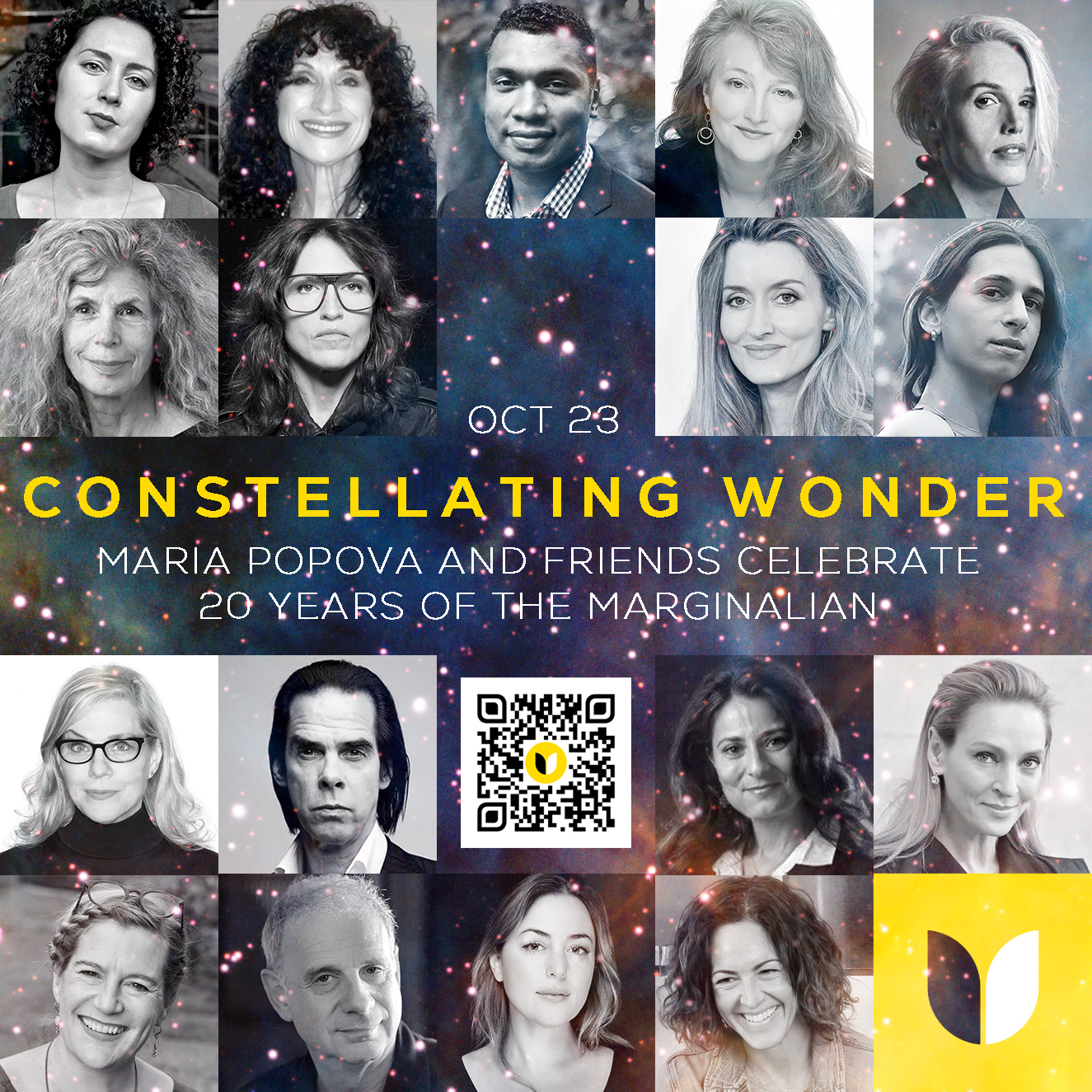
Tickets and details here.
FINAL MONTH OF THE RAFFLE
|
|
|
|
|


Nema komentara:
Objavi komentar