Courtesy of Kazakhstan’s Ministry of Ecology and Natural Resources
Kazakhstan just released its first tiger into the wild, 70 years after they were last seen
At the end of July, an adult female Amur tiger called Umit — which means “hope” in Kazakh — leapt from her cage on the back of a pickup truck as she was released into the wilderness of a 1.1 million-acre nature reserve in southeastern Kazakhstan.
It’s the first time in the 70 years since they were wiped out that a wild tiger will roam in the country.
The reserve was established in 2018 to create the conditions for the tigers’ return to the wild, including efforts to increase the population of their natural prey, such as Bukhara deer and kulan. The preparations took over a decade.
Good to know: The area where Umit was released was actually once inhabited by the extinct Caspian tiger. The Kazakh government chose to release Amur tigers after research showed their genetic makeup was almost identical to that of Caspian tigers, which went extinct due to habitat loss and hunting by humans.
It’s part of the nonprofit’s larger vision to ensure everyone in the country can get to a quality park within a 10-minute walk of their home.
Beyond adding color with murals and painted basketball courts, and other natural elements — like climbing boulders and tree stumps — the redesigns all have climate change in mind, with green spaces, rain gardens, and more to mitigate climate impacts and keep temperatures cooler.
Even better: Trust for Public Land isn’t coming in and redesigning the spaces on their own. Students survey each other and work together to decide what they want on their playground, and administrators, custodians, recess monitors, and afterschool caretakers weigh in, too: “The users are the designers.”
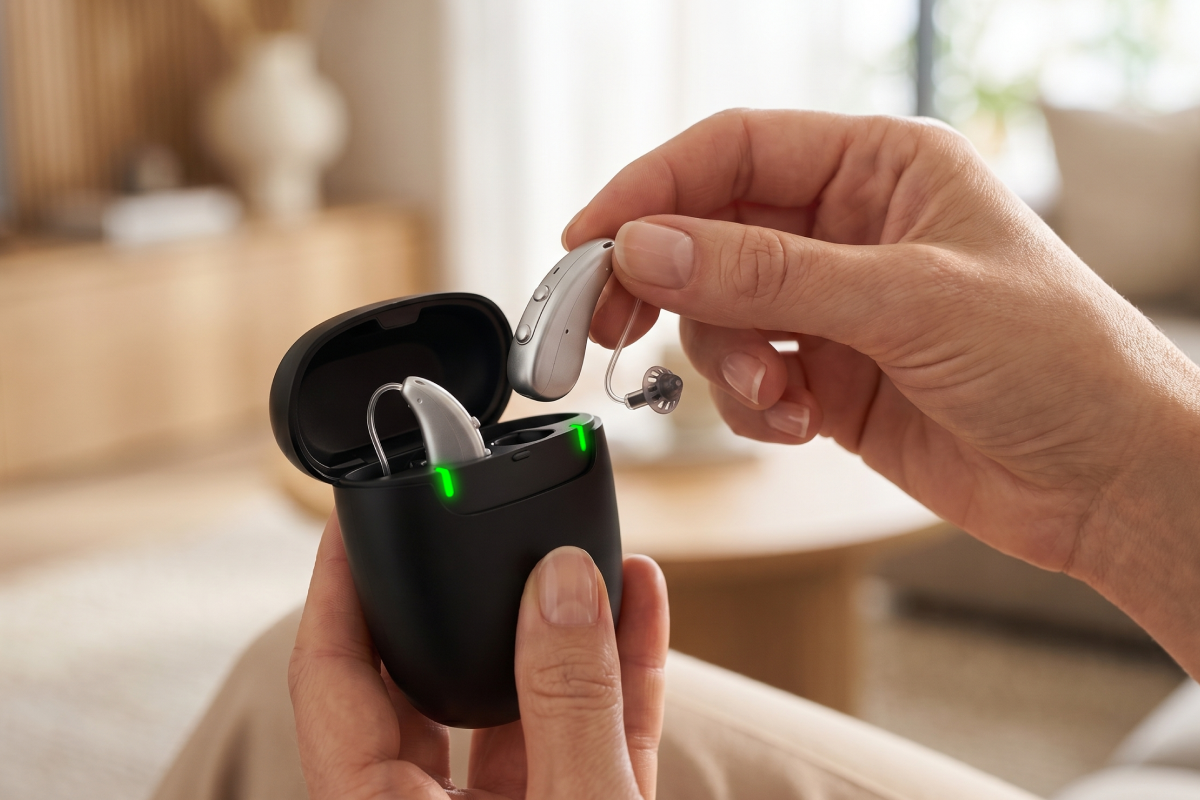
Americans over 55 are ditching hearing aids for this new device.
People who try Horizon IX by hear.com tend to say the same thing after: I waited too long.
Meet the nearly invisible innovation packed with two AI chips that separate speech from noise in real time. The result? Warm, natural sound anywhere life gets loud. No choosing between hearing the room and hearing the person.
Nearly invisible, rechargeable, smartphone-compatible, it's the device over 670K+ people switched too for unmatched clarity.
Experience the tech for yourself with a 45-day no-risk trial of the Horizon IX by hear.com.
Our sponsors help keep the Goodnewsletter free — thank you for supporting them when you can!
If you prefer an ad-free experience, become a Good Good Good subscriber.
National Parks
Zion National Park/Facebook
Zion is now the first national park to offer an all-terrain wheelchair for public use
Zion National Park just took a huge step toward making the parks more accessible to disabled visitors, debuting the first all-terrain wheelchair lending program for the public.
National parks around the U.S. have accessibility equipment, but it’s owned by nonprofits. Zion is now the first to own the equipment, and four others are reportedly “making steps” to do so, too.
The wheelchair is made by Extreme Motus, and cofounder Ryan Grassley has been taking his best friend, who has cerebral palsy, on adventures with it for the past seven years and has been advocating for their availability at national parks for years, too.
What’s the nuance? The lending program is available to guests on a first-come, first-served basis, with no reservations, which people have pointed out could make it difficult for disabled people to plan their visit to the park around the wheelchair’s availability.
The Great Barrier Reef is finally showing “signs of recovery” after dramatic declines
The Great Barrier Reef, which has been widely heralded as the Earth’s “largest living structure,” spans over 1,400 miles off the coast of Queensland, Australia — the size of a small country. For the past 15 years, the health of the coral reef has fluctuated dramatically, but a new report from the Australian Institute of Marine Science found “promising signs of recovery,” with coral cover actually increasing in several regions.
From 2025 to 2026, the northern reef’s coral cover increased from 30% to 35.1%, while the central reef’s coral cover increased from 28.6% to 31.6% — both above long-term averages.
Although climate change and coral bleaching remain very real threats, Australian scientists now have verifiable proof that the reef is becoming more resilient over time.
Even better: In early 2026, after a marine heatwave posed mass coral bleaching threats, a huge monsoon arrived just in time. The cloudy, rainy weather cooled the reef, giving the coral time to grow their symbiotic algae and survive another bleaching event.
A federal judge halted a major land deal in Izembek National Wildlife Refuge
In 2025, Interior Secretary Doug Burgum, serving the Trump administration, approved a land exchange involving 490 acres of Alaska’s Izembek National Wildlife Refuge.
The deal involved the construction of a road connecting the remote town of King Cove to an airport for emergency evacuations. However, 10 miles of that road would cut directly through the refuge’s protected wetlands.
Why is this good news? Izembek’s wetlands are home to one of the world’s largest beds of eelgrass, which feeds a quarter-million migratory birds every fall and provides refuge for more than 200 species, from brown bears to Pacific salmon. Alaska Natives have argued that construction would disrupt not just the environment but also the lives of local tribes, who subsist from the land through hunting and fishing.
You are currently a free subscriber to the Goodnewsletter. To get an ad-free Goodnewsletter, get a monthly Goodnewspaper, support good news journalism, and more — become a paid subscriber.
Get good news in your Google Search results in just two clicks!
Need help? Contact us for assistance. We’ve got your back.
You received this email because you signed up for the Goodnewsletter from Good Good Good — or because you followed a recommendation from another newsletter or ordered a Goodnewspaper.
To stop receiving The Goodnewsletter, unsubscribe. To opt in or out of other emails from Good Good Good, manage your email settings. To stop receiving all emails from Good Good Good — which may potentially include paid subscriber-exclusive content — you can opt out entirely.





Nema komentara:
Objavi komentar