Here’s how to protect yourself.️
͏ ͏ ͏ ͏ ͏ ͏ ͏ ͏ ͏ ͏ ͏ ͏ ͏ ͏ ͏ ͏ ͏ ͏ ͏ ͏ ͏ ͏ ͏ ͏ ͏ ͏ ͏ ͏ ͏ ͏ ͏ ͏ ͏ ͏ ͏ ͏ ͏
| |
|
|
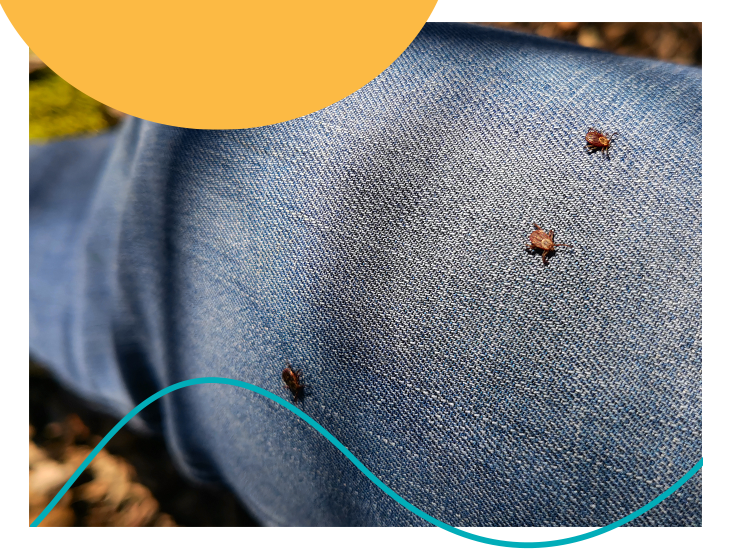
You might think of ticks as a wilderness problem, something for hikers and hunters to worry about. But you no longer need to leave town to be in their company because they’re finding homes in suburban yards and city parks. The one doing most of the damage is roughly the size of a poppy seed, and it has been having a very good year.
So that’s great, but what can you do to protect yourself? |
|
|
|
|
|
|
Let’s go,
Tim Snaith
Newsletter Editor, Healthline |
 |
|
Written by Tim Snaith
July 22, 2026 • 2 min read |
|
| |
|
|
|
|
| |
 |
|
|
| How to survive a record year for tick bites |
| Emergency rooms are seeing more tick bites than at any point in over a decade. CDC data show weekly visits nationwide are running higher than usual, and every region except the South Central states has logged its highest weekly count since 2017. The Northeast leads, with the Midwest close behind. |
| “This trend is consistent with a broader pattern of increasing tick-borne disease burden in the United States,” said Robert Glatter, MD, an emergency physician at Lenox Hill Hospital. He puts Lyme disease at 400,000 to 470,000 cases a year, up steadily for two decades. Some of that is because there are more ticks, but it’s also because the public is taking bites more seriously. |
| Lyme disease is the most common tick-borne illness, but not the only one. A deer tick can also carry anaplasmosis. One bite can carry both, though the CDC estimates coinfection at under 1 in 10 cases. Ticks are also linked to Rocky Mountain spotted fever and alpha-gal syndrome, which can leave you permanently allergic to red meat. |
| The spread largely stems from a warming climate. Milder, shorter winters let ticks and the animals they feed on survive in greater numbers and further north. Warmth also speeds their development and pushes the deer tick into regions once too cold for it. Tick exposure, Glatter says, “is no longer limited to rural or heavily wooded environments.” |
| Catching Lyme early |
| Lyme is hard to spot because it develops slowly. Symptoms can appear anywhere from 3 to 30 days after a bite. |
| 🎯 The rash: the best-known early sign is the “bull's-eye” rash, erythema migrans — a central red spot ringed by a clearer area and a red edge, at the site of the bite. |
| 👀 How it looks by skin tone: solid red on lighter skin; on darker skin it can resemble a bruise. It is often warm but neither painful nor itchy. |
| 🤒 Early symptoms read like a summer cold: chills, fever, sore throat, fatigue, aches, swollen lymph nodes, and sometimes blurred vision. |
| Prevention does most of the work |
| The CDC says removing a tick attached to you within 24 hours sharply reduces your Lyme disease risk. Wear repellent in tall grass and leaf litter, and check yourself when you come in. If you'd rather go natural, there's some evidence for essential oils like oil of lemon eucalyptus, homemade sprays, and other plant-based repellents, though none last as long as DEET. The Forest Service check takes minutes: |
| 🔎 Check your kit: inspect clothing, shoes, and bags before they come inside. |
| 🚿 Shower soon after: it rinses off unattached ticks and gives you a chance to spot any that have latched on. |
| 🪞 Do a mirror check: look for dark specks that could pass for a new freckle. |
| 👂 Mind the hidden spots: ticks favor warm, moist areas — hair, behind the ears, underarms, groin, behind the knees, between the toes. |
| If you find one attached, remove it promptly. See a doctor if a bull’s-eye rash shows up, or if you think a tick was on you for more than a day. |
|
|
| 💪 Over to you: Are ticks a problem in your area? Do you have a way to reduce the risk of getting bitten? Email wellnesswire@healthline.com to tell us. (Bonus points if you share a recipe.) |
| |
|
|
| |
| |
| |
| Until next time, |
 |
Take care of yourself, and we’ll see
you again soon! |
| |
 |
| |
 |
| This edition was powered by |
| an extra coffee. |
| |
|
|
|
|
|
View in browser
Did a friend send you this email? Subscribe here.
To see all newsletters, click here.
Privacy | Unsubscribe
We may feature your messages to our inbox within our content. Please do not provide any personal identifiable information. Replies may be edited for length and clarity. For more, see our Privacy Policy.
Our website services, content, and products are for informational purposes only. Healthline does not provide medical advice, diagnosis, or treatment and should not be used as a substitute for medical advice from a healthcare professional. Healthline encourages you to make any treatment decisions with your healthcare professional.
Every product we recommend has gone through either Healthline’s or Optum Now’s vetting processes. If you buy through links on this page, we may receive a small commission or other tangible benefit. Healthline has sole editorial control over this newsletter. Potential uses for the products listed here are not health claims made by the manufacturers. Healthline and Optum Now are owned by RVO Health.
© 2026 RVO Health
1101 Red Ventures Drive
Fort Mill, SC 29707 |
| |
|
|
  |
|
|
|
|





Nema komentara:
Objavi komentar