Researchers think it may do something useful.️
͏ ͏ ͏ ͏ ͏ ͏ ͏ ͏ ͏ ͏ ͏ ͏ ͏ ͏ ͏ ͏ ͏ ͏ ͏ ͏ ͏ ͏ ͏ ͏ ͏ ͏ ͏ ͏ ͏ ͏ ͏ ͏ ͏ ͏ ͏ ͏ ͏
| |
|
|
| While honey gets all the glory, royal jelly is the “super-fuel” responsible for the longevity and health of the Queen Bee. It’s packed with B vitamins and unique glycoproteins found nowhere else in nature, but does it offer any health benefits for humans? Is royal jelly really a must-hive or is the hype just bee-s? |
|
|
|
|
|
|
Let’s look into it,
Tim Snaith
Newsletter Editor, Healthline |
 |
|
Written by Tim Snaith
April 29, 2026 • 3 min read |
|
| |
|
|
|
|
| |
 |
|
|
| Fit for a Queen |
| Hay fever season approaches. If, like me, you are prone to seasonal allergies, you’ve probably tried at least one folk remedy, including local honey. Eating some honey produced by neighborhood bees supposedly builds your tolerance to pollen, reducing your symptoms. Sadly, a 2020 review found no scientific evidence this works. However, there is another bee product that's been getting more serious research attention: royal jelly. |
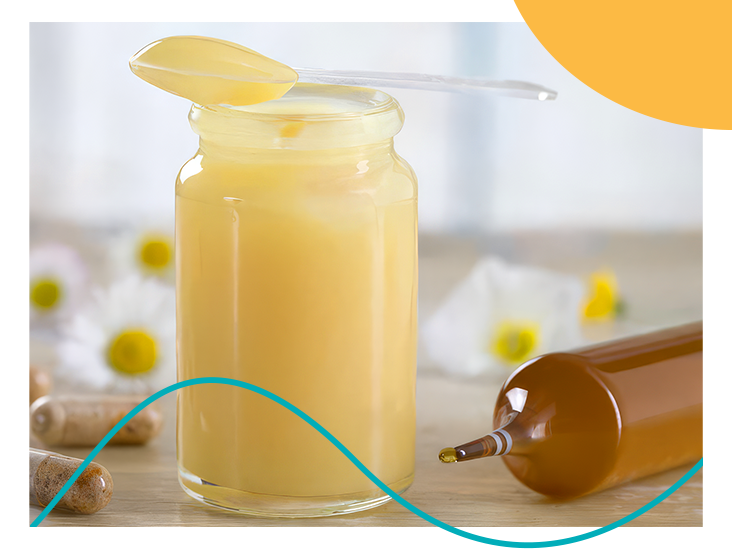
| It’s a milky secretion produced by young worker bees and fed only to larvae destined to become queens. It makes future queen bees longer-lived and more fertile than their genetically identical sisters. Whether any of this translates to us humans is what researchers have been working to find out. |
| Royal jelly has an unusual composition. Alongside B vitamins and trace minerals, it contains a group of proteins called major royal jelly proteins (MRJPs), found only in the beehive and central to queen development. There’s also a fatty acid called 10-HDA that exists nowhere else in nature. A 2024 review suggests 10-HDA may help the body regulate inflammation and support immune function, though most of that evidence relies on lab and animal studies. |
| The allergy angle is where things get complicated. Animal research suggests royal jelly may dampen the body’s histamine response (histamine being the chemical behind most allergy symptoms) and a small human trial found a bee product combination improved allergy symptoms. But the human evidence remains too thin to recommend it as a remedy. Plus, royal jelly itself can trigger allergic reactions in people who are sensitive to bee products. Severe reactions have been reported. |
| There is better evidence for some other benefits. |
- A 1-month study from 2016 found that consuming 3 grams daily dropped total cholesterol by 11% and “bad” cholesterol by 4%.
- A 6-month study with healthy adults showed a 20% improvement in fasting blood sugar.
- A 2018 12-week trial in 42 postmenopausal women found 800 milligrams (mg) daily helped ease back pain and anxiety.
|
| None of these were large studies, but the results were consistent across populations. |
| A 2025 clinical trial in people with multiple sclerosis adds more recent evidence. Over 2 months, those taking royal jelly daily showed significantly lower inflammation markers in their blood and reported better quality of life than those on a placebo. |
| The strongest case sits around cholesterol, blood sugar, and menopausal symptoms. Most studies are small, and the science is far from settled, but if you’re curious and don’t have bee allergies, it could be a low risk supplement to try. Start small, watch how your body responds, don’t expect to look or feel any younger. |
| The queen bee lives longer because she is the queen bee. Whether privileged access to royal jelly promises the same for us is still an open question. |
|
|
| 💌 Over to you: Have you tried royal jelly? What helps control your seasonal allergies? Email wellnesswire@healthline.com to submit your request, and we’ll do our best to cover it in an upcoming edition. |
| |
|
|
| |
 |
|
|
| Why Spring Allergies Are Getting WORSE! |
| Research shows the pollen season now begins around 20 days earlier than in 1990 and produces over 20% more pollen. Symptoms such as sneezing, congestion, and itchy eyes are becoming more severe. Here’s why, and how to manage them. |
|
|
| |
|
|
|
|
  |
| |
| |
| |
| Until next time, |
 |
Take care of yourself, and we’ll see
you again soon! |
| |
 |
| |
 |
| This edition was powered by |
| local honey. |
| |
|
|
|
|
|
View in browser
Did a friend send you this email? Subscribe here.
To see all newsletters, click here.
Privacy | Unsubscribe
We may feature your messages to our inbox within our content. Please do not provide any personal identifiable information. Replies may be edited for length and clarity. For more, see our Privacy Policy.
Our website services, content, and products are for informational purposes only. Healthline does not provide medical advice, diagnosis, or treatment and should not be used as a substitute for medical advice from a healthcare professional. Healthline encourages you to make any treatment decisions with your healthcare professional.
Every product we recommend has gone through either Healthline’s or Optum Now’s vetting processes. If you buy through links on this page, we may receive a small commission or other tangible benefit. Healthline has sole editorial control over this newsletter. Potential uses for the products listed here are not health claims made by the manufacturers. Healthline and Optum Now are owned by RVO Health.
© 2026 RVO Health
1101 Red Ventures Drive
Fort Mill, SC 29707 |
| |
|
|
  |
|
|
|
|


Nema komentara:
Objavi komentar