
7 books about witches, 'nymphos,' unmarried mothers, and other 'bad girls'These books helped me place my family’s story within a broader cultural one—about sex, shame, and the control of women’s bodies.
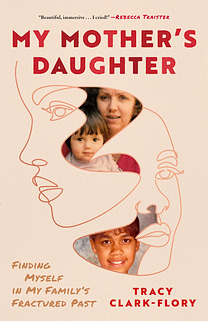
Within days of finding my sister Kathy through a DNA test, books started piling up on my desk. Those books were how I started trying to wrestle with our mom’s past. I already knew that our mom was sent away in shame to a home for unwed mothers as a pregnant teenager in the sixties, twenty years before I was born. The only reason I took the test was in hopes of finding my sister. During our first phone call after our DNA match, Kathy asked me what I knew about the circumstances of her adoption. The truth was: very little. It struck me as odd that I didn’t know more about the adoption or the home. What were homes for unwed mothers, really? Our mom had died years earlier, so I couldn’t ask her any of my questions. Instead, I turned to books. First it was essential histories of these homes. Then, once I got a handle on what had happened to my mom and sister back in 1965, I turned to books that helped me to place my family’s story within a broader cultural one—about sex, shame, and the control of women’s bodies. I write about some of that research process in my memoir, My Mother’s Daughter: Finding Myself in My Family’s Fractured Past, which comes out on May 5—in just two-and-a-half weeks—and which I hope you’ll take a moment to pre-order right now. Like, actually. I’ll wait. Have I mentioned that preorders are absolutely essential to giving a book a chance at success? Feel free to click out and pre-order. I’ll be here when you’re done.
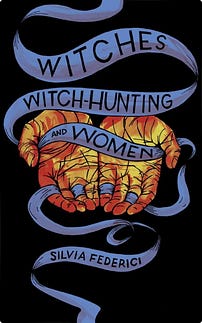
Thanks for that. As you’ll soon find in my end notes, dozens upon dozens of books went into this process of understanding my mom’s past and the bigger picture of my family’s story. Here, I’ll share just a handful that rearranged my brain and proved most essential. Silvia Federici’s Witches, Witch-Hunting, and Women
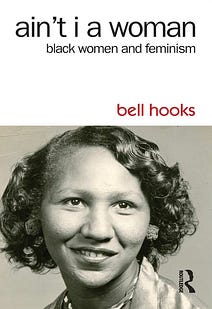
I mean, just read everything Federici has ever written, OK? And be sure to include Patriarchy of the Wage, which also makes an appearance in my book. That’s the one where she argues that the punishment of sex workers was essential to convincing women to accept unpaid work within the family home. I ended up referencing Witches, Witch-Hunting, and Women a bunch—including around how many of the women accused during the witch hunts were unmarried mothers or “promiscuous” women. A choice quote from Federici: “Once exorcised, denied its subversive potential through the witch hunt, female sexuality could be recuperated in a matrimonial context and for procreative ends.” This is exactly what happened at these maternity homes. Unwed mothers were hidden away during their pregnancies, separated from their babies through coerced adoptions, and then redirected to marriage. Their sexuality was “recuperated” within the nuclear family. bell hooks’ Ain’t I a Woman
The vast majority of women sent to pre-Roe homes for unwed mothers were white. That’s because of racist stereotypes about Black women’s hypersexuality, which ruled out the possibility of “redemption.” I found Ain’t I a Woman to be essential to my own understanding of the historical context of the portrayal of white women as pure and innocent, alongside the demonization of Black women’s sexuality. Homes for unwed mothers were build upon these racist ideas of “good” and “bad” women. As Patricia Hill Collins puts it in Black Feminist Thought, another must-read book, the image of the jezebel made “pure White womanhood possible.” This is another case where I have to say: read everything else that bell hooks has written, too. Gail Pheterson’s The Prostitution Prism
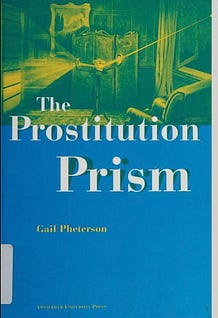
Good luck finding a physical copy of this one! It’s a crime that this book isn’t more readily available (this used copy is available for $148). I read it on the Internet Archive, an organization that I personally thanked in my acknowledgements because it made so many out-of-print books available to me. The sex-worker activist Gail Pheterson’s writing has been so meaningful to me over the years, but I love this book in particular for its explanation of the concept of “whore stigma,” which applies not only to sex workers but to anyone who steps outside the bounds of appropriate femininity. Just like Federici argued—along with the sex-worker activist Margo St. James—the punishment of sex workers is a way to keep all women in line. Elaine Showalter’s The Female Malady
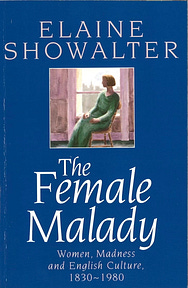
There’s a whole chapter in my memoir that dives into discussions of women and madness, for reasons you’ll have to discover in the book itself. Suffice it to say: I talk a lot about restrictive ideas around women’s desire and sexuality, especially as they collide with motherhood. Elaine Showalter’s The Female Malady shows that feminine ideals have shaped ideas around women’s mental illness across history—and she notes that “uncontrolled sexuality seemed the major, almost defining symptom of insanity in women.” Jill Nagle’s Whores and Others Feminists
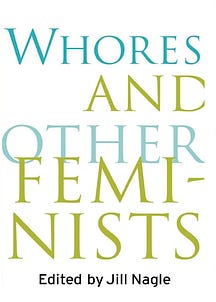
The anthology Whores and Others Feminists, edited by Jill Nagle, is one that I’ve returned to again and again for over 15 years. There are essays by legends like Nina Hartley, Annie Sprinkle, and Carol Queen. Nagle’s introduction alone is worth the price of admission. She talks about the concept of “compulsory virtue,” a take off Adrienne Rich’s theory of “compulsory heterosexuality.” This connects to Pheterson’s theory of “whore stigma,” which acts upon all of us. It is a controlling threat. Rickie Solinger’s Wake Up Little Susie
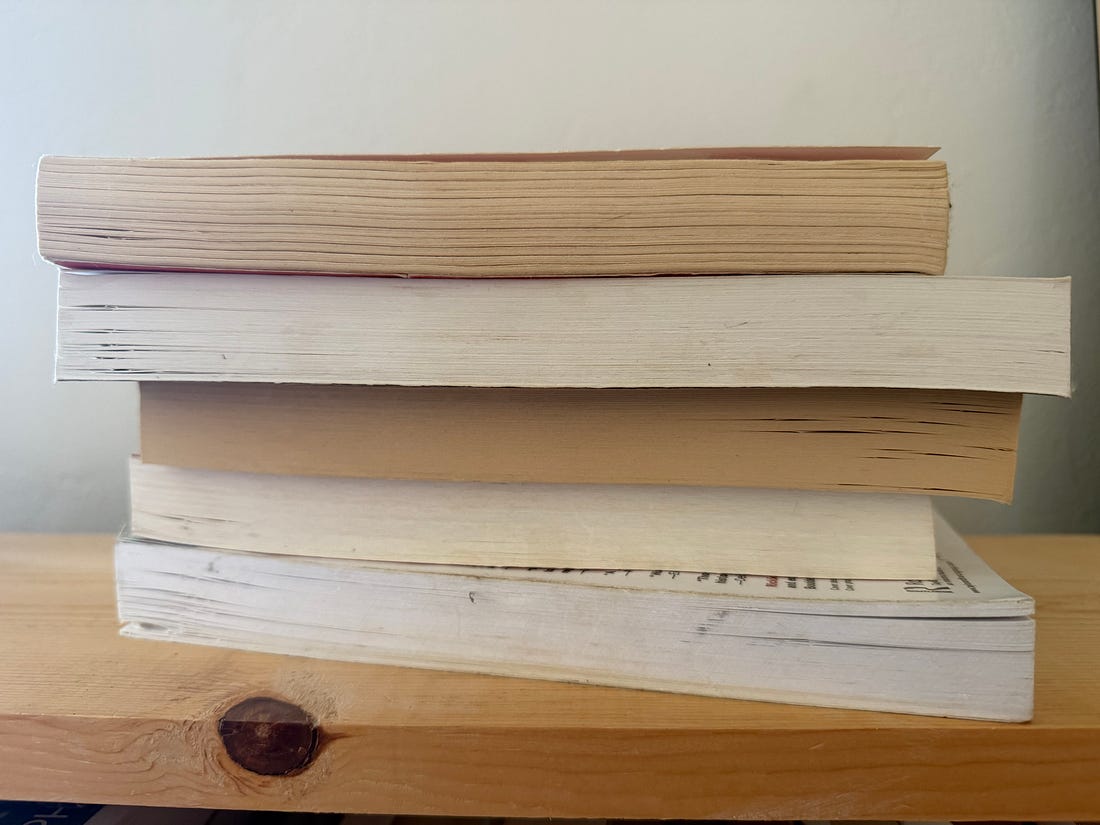
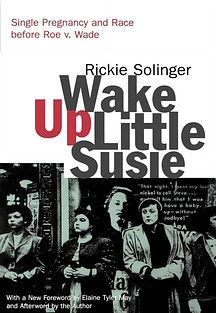
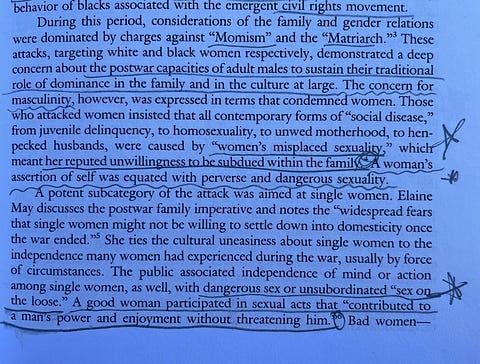
When I reached out to Rickie Solinger during the fact-checking process for my book, I was starstruck. Her work as a historian focusing on issues of reproductive justice has been essential and groundbreaking. Wake Up Little Susie gave me an entirely new lens on the pre-Roe era of adoption and homes for unwed mothers. She helped me to see these homes as part of a racist and sexist system that was pushing white unwed mothers toward adoption and then re-routing them into the nuclear family home. Meanwhile, Black single mothers were expected to raise their own children—and, as a result, they faced a slew of associated consequences. Here’s a little photo that is representative of my entire copy of the book—it’s all underlines and squiggles and stars.
It’s just two-and-a-half weeks until my book comes out. If you buy a copy now, it’ll help set this book up for success. Pre-orders are a powerful signal to libraries, bookstores, and publishers. I really can’t emphasize that enough. They help determine a book’s trajectory very early on. It would mean the world to me if you pre-ordered a copy now.It’s gotten starred reviews from Kirkus (”deeply researched, lyrically written,” “trenchant,” “moving,” and “a powerful rejection of white-male dominated systems of oppression”) and Booklist (”a stirring family history... reckoning with race, power, privilege, and women’s roles”).A pre-order means you get it on or before pub day.
|




Nema komentara:
Objavi komentar