🗓️ Tomorrow is International Women's Day! If you don't have them already, make plans to celebrate.
🏆 Catherine O'Hara received a posthumous Actor Award for her role in "The Studio." Her co-star and the show's co-creator Seth Rogen accepted it on her behalf, saying, "She really showed that you can be a genius and be kind."
A Paralympic snowboarder made his own prosthetic leg, and 25 competitors will wear his designs in Italy
Mike Schultz is about to make his third and final appearance at the Paralympics in para snowboarding — and he, along with 25 of his competitors, will be wearing a prosthetic he designed himself.
In 2008, Schultz lost his leg in a snowmobiling accident. His first prosthetic couldn't withstand the impact and intensity of the sports he'd loved all his life, so — despite having no technical engineering training — he built his own.
Initially just setting out to "get back on my motocross bike and my snowmobile," he realized he could have a much bigger impact. In 2010, he founded BioDapt to design and make lower limb prosthetic components for other para athletes, and now, the entire U.S. Paralympic snowboarding team will be wearing his prosthetics.
Even better:BioDapt just announced that it would be building on its existing work and partnering with Autodesk, an AI-powered manufacturing company that will help it refine its products and scale to serve even more people.
Lupita Nyong'o launched a GoFundMe for women's health research after discovering she has 50 uterine fibroids
In 2014, Lupita Nyong'o was regularly fatigued, pre-anemic, and felt immense pain during her periods — and as most women are taught, "pain was simply part of being a woman," so she "didn't question it."
As it turned out, she had more than 30 uterine fibroids — noncancerous growths that line the walls of her uterus that can cause a number of debilitating symptoms. She got them surgically removed, and then learned that there was nothing she could do to prevent them from returning. They did — and this time, there were 50.
Why is this good news?Fibroids affect up to 80% of women by age 50, and many go without relief, as fibroid treatment is currently limited to invasive surgeries. Black women are also disproportionately affected and experience fibroids earlier and with more severe symptoms.
This fundraiser will help support critical research into other treatment and prevention options.
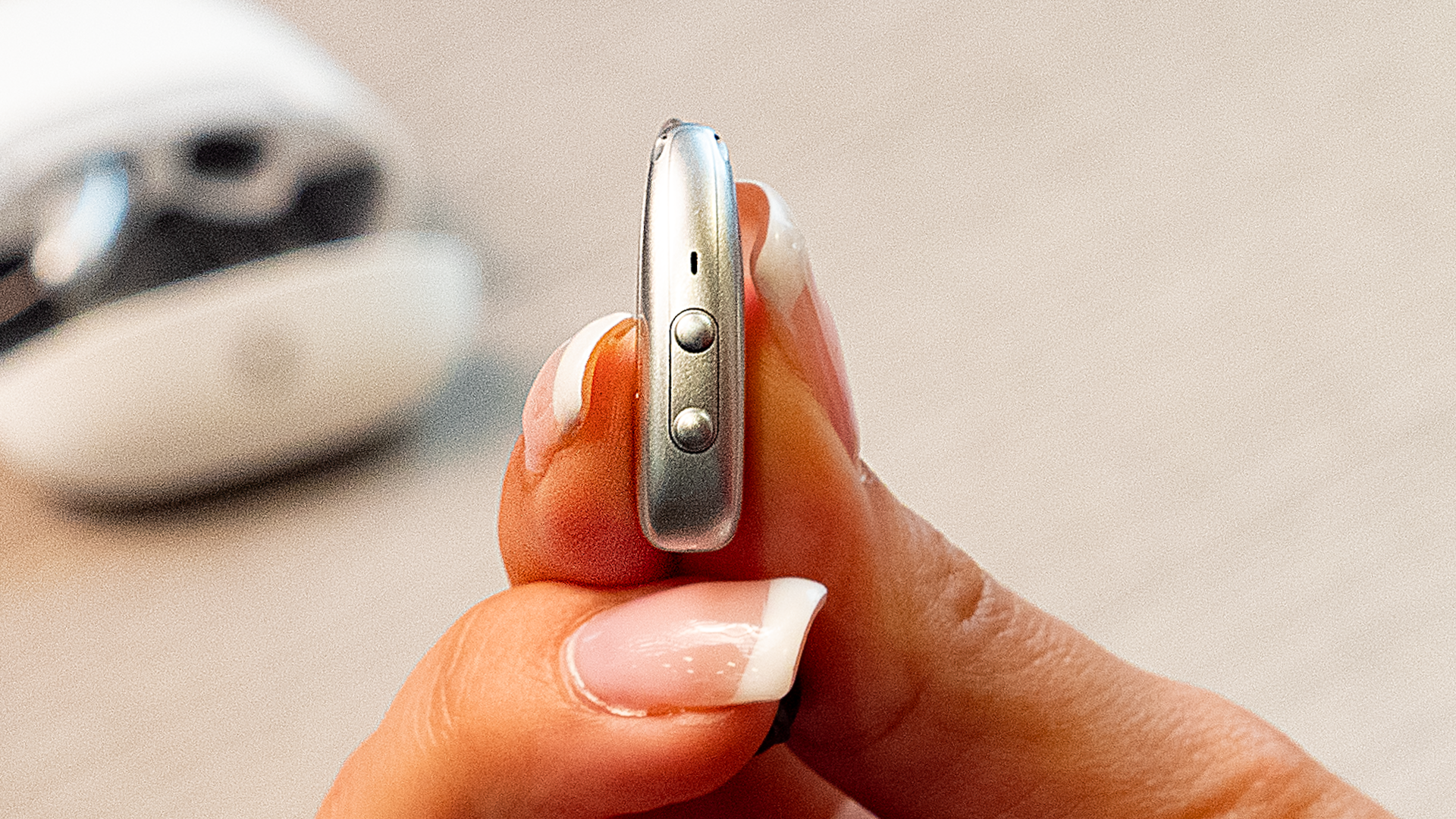
There's a reason experts are calling hear.com's new IX hearing aids "the ultimate conversation starter." Because they're the world's first designed with clarity in conversation in mind.
That means state-of-the-art noise suppression. Lightning-fast dual processing technology.
The most natural listening experience ever. In your day-to-day life, that means effortless conversation, wherever you go.
Our sponsors help keep the Goodnewsletter free — thank you for supporting them when you can! If you prefer an ad-free experience, become a Good Good Good subscriber.
Sports
Sydney Peterson/Instagram
When she's not skiing, a US Paralympian is a researcher working to treat neurological conditions like hers
After years of symptoms, at 19 years old, Sydney Peterson was diagnosed with dystonia, a condition that caused involuntary muscle contractions in Peterson's left arm and leg due to faulty signals sent from the brain. A lifelong skier, she turned to the Paralympics.
Peterson skis with one pole and a custom left ankle brace to help her glide across the snow, and she brought home three medals (a bronze, silver, and gold) from the 2022 Beijing Games.
Aside from being a Nordic skier on the U.S. Paralympic team in Milan Cortina, Peterson is working towards her PhD at the University of Utah in neuroscience — specifically movement disorders similar to her own.
Why is this good news? While treatments and interventions like brain surgery can help her manage her condition, Peterson knows dystonia cannot be cured — but it can fuel her "interest in science." In learning about her own condition, she's now trying to "see if I could help other people."
A city in Spain is reviving a 3,000-year-old solution to combat extreme heat
As one of the hottest cities in Europe, Seville, Spain finds itself at the frontlines of the climate crisis. Blending modern science with ancient technology, the city is installing underground aqueducts to help keep itself cool.
Funded by the EU, the CartujaQanat project's "quanats" work by cooling water underground in naturally low temperatures that occur at night. When temperatures peak outdoors during the day, the cool water is sent up into the ceiling to counteract the heat.
The system also sends water into subterranean pipes that cool air, which will be released via ducts in public spaces. Outdoors, mist is sprayed to lower the temperature through evaporation.
Why is this good news? While we need to invest as much as possible into preventing further warming, the climate crisis is already bringing extreme weather to places all over the world. Adaptation is a critical part of combating climate change — and solutions like this will save lives when extreme heat reaches our communities.
The new areas create corridors to improve wildlife migration and maintain forest-based economies for locals and is part of an effort by local governments to link Indigenous territories with nearby national parks and strengthen ecological connectivity.
The new management area will help protect the endangered Bolivian river dolphin and vulnerable harpy eagle, among other species.
Why is this good news? In recent years, Bolivia has had some of the highest deforestation rates in the world, driven by agribusiness, cattle ranching, and fires, among other factors. In 2025, it lost 1.8 million hectares (4.4 million acres), and the year before that, it lost around 490,000 hectares (1.2 million acres).
We're thrilled to announce the first-ever Feminist Edition!
While feminism has historically been a movement built around women's liberation, feminism isn't just for women — it gives us a framework to imagine a world where gender identity is not a liability, where any person you meet is legally and morally entitled to basic human rights.
The first-ever Feminist Edition of the Goodnewspaper celebrates the fight for a more equitable future and reminds us of the progress we continue to make — even when it seems like that progress has stalled.
Ends tomorrow: In honor of Women's History Month, you can get this issue for free when you subscribe to the Goodnewspaper!
You are currently a free subscriber to the Goodnewsletter. To get an ad-free Goodnewsletter, get a monthly Goodnewspaper, support good news journalism, and more — become a paid subscriber.
Get good news in your Google Search results in just two clicks!
Need help? Contact us for assistance. We've got your back.
You received this email because you signed up for the Goodnewsletter from Good Good Good — or because you followed a recommendation from another newsletter or ordered a Goodnewspaper.
To stop receiving The Goodnewsletter, unsubscribe. To opt in or out of other emails from Good Good Good, manage your email settings. To stop receiving all emails from Good Good Good — which may potentially include paid subscriber-exclusive content — you can opt out entirely.



Nema komentara:
Objavi komentar