Selling infidelity as feminismNetflix's tiresome Ashley Madison docuseries is good for one thing: a reminder of how 'equality' and 'freedom' are coopted for heterosexual men's fantasies.
After sitting through two-and-a-half hours of Netflix’s Ashley Madison docuseries, I can tell you there is precisely one interesting thing to be gleaned from it: the company tried to sell infidelity as feminism, and they did it because they desperately needed women to join the site to fulfill men’s fantasies. The three-part series, Ashley Madison: Sex, Lies & Scandal, really pushes the limits of not-too-long-ago internet nostalgia, lingering on the founding story of this dating site geared toward extramarital affairs. It drags us through the shenanigans of CEO Noel Biderman, who regularly made the TV rounds with his shameless pitch for cheating. “Life is short,” the company’s tagline went. “Have an affair.” All this nostalgia builds up to Ashley Madison’s downfall in 2015, when hackers leaked the site’s user information, including people’s legal names. But I got everything I wanted from the show about 30 minutes into the first episode with a clip from a 2010s-era TV commercial for the site. You see a man and a woman at a fancy restaurant. “Have you ever found yourself on a really bad blind date?” a woman narrates. In quick succession, the man blows his nose in a cloth napkin, picks his teeth in the reflection of a knife, and checks out the waitress. “Now imagine that date lasting the rest of your life,” the narrator continues. Turns out, it isn’t a first date. They’re a married couple celebrating their wedding anniversary. 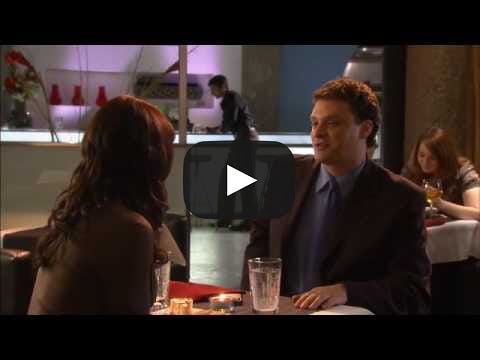 It was an attempt to draw women to the site with a narrative of freedom and revenge. Trapped with a dick of a husband? Here’s an escape hatch. At the time of the commercial, Biderman said:
In this era, Biderman was really trying the “women’s empowerment” angle. He even proclaimed himself “one of the most important feminists that the world has seen.” (Note: Ashley Madison was also running commercials depicting men as trapped with unattractive women and desperate for anyone other than their wife.) In a cable TV appearance, Biderman claimed that women were driving infidelity. “They are starting to behave more and more like men,” he said. In another interview, Biderman suggested that women’s “greater equality,” including better “economic conditions,” were leading to greater choices and making them “more willing to put their marriage at risk.” As the journalist Claire Brownell puts it in the Netflix series, “He would say, ‘I’m a postmodern feminist. I’m just trying to make things better for women. I’m helping them to escape the bounds of patriarchal marriage.’” The reality, though, is that Ashley Madison was trying to make things better for Ashley Madison. The site was absolutely desperate for women. “You need a good mix of both sexes for this thing to work. Women were vital,” says Evan Back, a former Ashley Madison executive, pointing out that the site made money by charging men for the privilege of interacting with other users. “If you don’t have women then you don’t have anyone corresponding with the men who are paying.” In fact, ex-staffers claim that they created fake profiles and used bots to interact with men on the site. Some of the example bot messages shown in the series:
“Women were the product,” says Brownell, “but mostly the fantasy of the idea of women was the product.” I’d add that it was specifically the fantasy of the sexually “liberated” woman, which is to say: the woman “starting to behave more and more like men,” as Biderman put it. Ashley Madison’s “equality” pitch wasn’t just a way to try to draw women to the site, it was also the fantasy of its main user base. It’s all very reminiscent of the hookup culture of this same era, which similarly came with the idea of women’s sexual empowerment meaning “having sex like men,” which could be both freeing and constraining, especially given the broader social and political context. (I meannn, go read my book.) This idea of “women as the product” is also very timely in the wake of Bumble’s recent attempt to target women “exhausted” by modern dating with an aggressive anti-celibacy campaign. Over and over again, heterosexual men’s desires are sold to women as empowerment. The Netflix series makes clear that men were exploited by the Ashley Madison fantasy: they paid loads of money to interact with horny bots. The leak itself destroyed careers and relationships—and, tragically, it was linked to two suicides. Women were exploited, too: the series speaks with the wives of men who used the site, including the widow of a man who died by suicide after the leak. And then there is Biderman’s own wife, Amanda, with whom he publicly claimed to be monogamous. She sometimes accompanied him on the TV circuit, where she supported the basic premise of the site but explained that she would be heartbroken if her own husband cheated. After hackers hit the site, there was a leak of internal corporate emails, including many suggestive ones sent from Biderman to women who were not his wife.
|
četvrtak, 23. svibnja 2024.
Selling infidelity as feminism






Pretplati se na:
Objavi komentare (Atom)
How Much Does Mounjaro Cost? Plus, Ways to Save
Plus: Type 2 Diabetes: How Long Does It Take for Insulin to Work? ͏ ͏ ͏ ͏ ͏ ͏ ͏ ...

-
Plus: Kicking off Pride Month with the new Goodnewspaper and more good news to celebrate! ...
-
Plus: A landmark ruling for new fossil fuel projects and more good news to celebrate! ...
-
And a job board for work in the food industry ͏ ͏ ͏ ͏ ͏ ͏ ͏ ͏ ͏ ͏ ͏ ͏ ͏ ͏ ...


Nema komentara:
Objavi komentar