Anxiety can blur the lines between your responsibilities and others’ responsibilities. This can happen with your children, parents, friends, or even the person behind you in the checkout line. Is my help really helpful, or is it an attempt to swat at the intensity I feel in the moment? Am I offering someone a hand, or blasting a metaphorical fire extinguisher at their distress, so I too don’t burst into flames? Often it’s the latter. Here are some behaviors that might indicate you’re over-involved with someone’s distress, rather than walking alongside them for life’s challenges.
Asking someone to describe what they think is the challenge is a great way to curb that initial impulse to fix, fix, fix. Most of the advice we give people they could generate themselves or easily find in a google search. When people ask me for advice, one of my favorite phrases to say is, “I couldn’t tell you better than Google.” This is a reminder to me and them that I have no magic powers.
Distance can be a marker of over-involvement. How do you stay connected but separate in moments of anxiety? One person who’s trying to be responsible for how they manage themselves is more useful than one person who’s trying to manage the other.
Scenario-predicting is the human superpower. But it can also be a grand waste of time. People can tell you if they’re upset. Parents know that it isn’t helpful to snowplow every sticky situation for our children, yet we crank up the engine for so many of our adult relationships.
How quickly do you change the conversational channel when a person becomes distressed? When might it look like to hang in there and ask a question that engages their thinking, or simply take a breath while people begin to find their way?
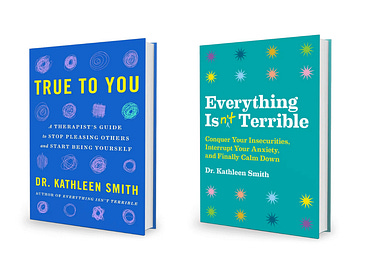
Be honest. How many think tanks are up and running in the group chat about how a colleague could do better or a family member could behave better? People do not need a working group dedicated to their cataloging their immaturity. They need individual relationships where people are trying to be responsible for themselves. What would you add to this list? Similar posts: Are You Interested and Along for the Ride? (paid subscribers) Staying Smart When Others Are Anxious Are You Playing Base Coach in Your Relationships? (paid subscribers) News from KathleenNew podcast interview - I had a lovely time chatting with Dr. Jenny Brown of the Parent Hope Project about navigating the holidays with family without losing yourself. Listen on Apple or Spotify Really enjoying a journaling class I’m taking with the amazing writer Amy Shearn. You can check out her substack here. Buy my books True to You and Everything Isn’t Terrible for more in-depth stories of people working on their relationships and themselves. If you love them, consider giving them a review on Amazon so other folks can find them. If you haven’t gotten the free digital workbooks for them, email me.
Want to read more of my writing? Check out my newsletter archives. Paid subscribers can access the entire archive. Email me if you want me to speak to your group or are interested in doing coaching with me. Follow me on Linkedin, Facebook, or Instagram. You're currently a free subscriber to The Anxious Overachiever. For the full experience, upgrade your subscription.
|
srijeda, 3. prosinca 2025.
Are You Over-involved with Someone's Distress?






Pretplati se na:
Objavi komentare (Atom)
What Happens When You Label Your Child as Anxious, or Your Mother as Selfish?
How labels lead to stuckness in relationships. ͏ ͏ ͏ ͏ ͏ ͏ ͏ ͏ ͏ ͏ ͏ ͏ ͏ ͏ ...
-
Plus: Kicking off Pride Month with the new Goodnewspaper and more good news to celebrate! ...
-
Schizophrenia affects a person's thoughts, feelings, and perception of reality. While its causes aren't entirely understood, stress ...
-
Plus: A landmark ruling for new fossil fuel projects and more good news to celebrate! ...


Nema komentara:
Objavi komentar