So, *about* positive masculinityJust a cautionary, big-picture note re: Tim Walz and Doug Emhoff. What about 'tonic' humanity?
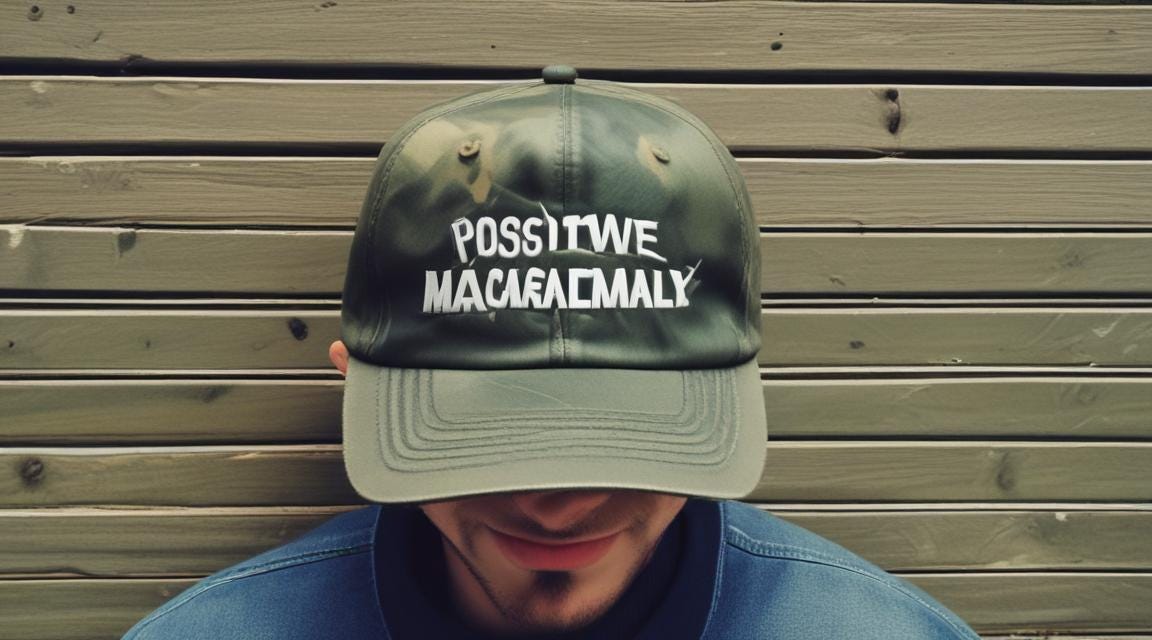
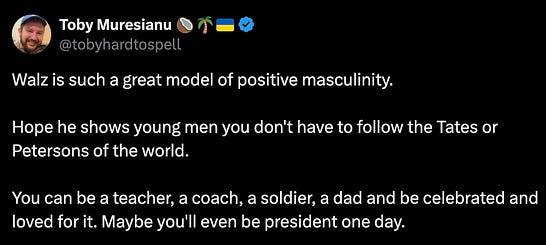
Looks like we’ll be talking about masculinity a whole lot for the next several months—and, right away, I just want to say a thing or two about “positive masculinity.” Of course, last week I wrote about how the Good Husband meme-ing of Doug Emhoff expressed a kind of desperate, grasping hetero-optimism opposite all the evidence-based hetero-pessimism inspired by, among so many other things, the current presidential race. “[Vice President Kamala] Harris is facing off against a couple of men who… are representative of a racist right-wing pro-natalist effort to coerce women into traditional patriarchal marriage and motherhood, and trap them there by ending no-fault divorce,” I wrote. A few days later, Harris announced Minnesota Governor Tim Walz as her running mate. Suddenly, everybody was talking about his brand of masculinity. He hunts and wears camouflage and makes dad jokes. He also advocates for abortion access and LGBTQ rights, and he’s not trying to trap women in marriage. He is seen as having traditionally masculine traits that are associated with strength and toughness, along with feminine-coded traits of care and compassion. Opposite the weird/toxic/hateful masculinity of the Trump ticket, Walz can feel like a cold glass of water in the middle of the desert. As Moira Donegan put it on X: “Tim Walz’ model of masculinity—one of wholesome, benevolent cheerfulness—offers a really stark contrast to the boorish domination of Trump and spine-chilling creepiness of Vance.” I have been enthusiastically chugging that cold glass of water (to a degree that I find embarrassing and hard to admit, because I also struggle intensely and existentially with Harris’s Israel-Palestine stance, her related policy silence, and her treatment of protesters yesterday). At the same time, I have been feeling a little itchy about the bigger-picture implications of the current masculinity discourse. That itchiness is in part due to cases where Walz’s masculinity—including his openness to having a woman as his boss—is framed as “real” and “tougher” compared to a “weak man” like Trump. Of course, it’s true that Trump’s masculinity is built on insecurity. But the analysis of toughness versus weakness actually reinscribes traditional masculine frameworks—which are about insecurity—even as it appears to reinvent them. The bigger part of my itchiness is the reappearance, once again, of phrases like “positive” and “tonic ” masculinity (as in a masculinity that “helps and heals, instead of harming”). I am so tired of these phrases. The insistence on masculinity keeps boys and men and everybody trapped in a box. So much ostensibly progressive discourse around masculinity actually feels more like a defensive and phobic balancing act. Just enough of the “good” feminine qualities, but without being too feminine, too much like a woman, which is insulting to men and women (and often rooted in homophobia). The Walz model is compelling because he still reads as masculine. Today, Mike Nellis, who recently co-organized a White Dudes for Harris call, said of Walz:
Genuine question: Why fight over what it means to be a man? It is both true that positive/tonic masculinity has powerful example-setting and norm-expanding potential, and that we should be aiming beyond masculinity—or, perhaps, deeper than masculinity. What are some positive, inspiring, and exciting models for being a person in the world? What if some of those models for boys and men actually came from women? I love Ruth Whippman’s take on this, which she diggs into in her book BoyMom. When it comes to giving “boys and men a healthier, more expansive model for how to live,” she suggests that “a good start would be ditching the masculinity framework altogether.” The attempt “to expand the definition of what can be considered masculine only ends up reinforcing the idea that masculinity itself is a non-negotiable,” she argues, which “sends a clear message to boys and men that appearing masculine is so fundamental to male worth that they must never reject it all together.” That system of belief, and its associated pressures, are “at the very root of boys’ problems,” writes Whippman. Last year, in a fantastic essay titled “Against Masculinity,” Nathan J. Robinson wrote:
In other words: what about good and positive and tonic humanity? Paid subscribers make this newsletter possible. Will you upgrade to paid to support the work I do here every week? It costs less than $5 a month.
|
četvrtak, 8. kolovoza 2024.
So, *about* positive masculinity






Pretplati se na:
Objavi komentare (Atom)
🗞️ Good News: You will now receive the Goodnewsletter every day!
Thanks for switching to daily good news! You can expect the Goodnewsletter to arrive in your inbox every day, Monday through Friday. ͏ ͏...
Nema komentara:
Objavi komentar